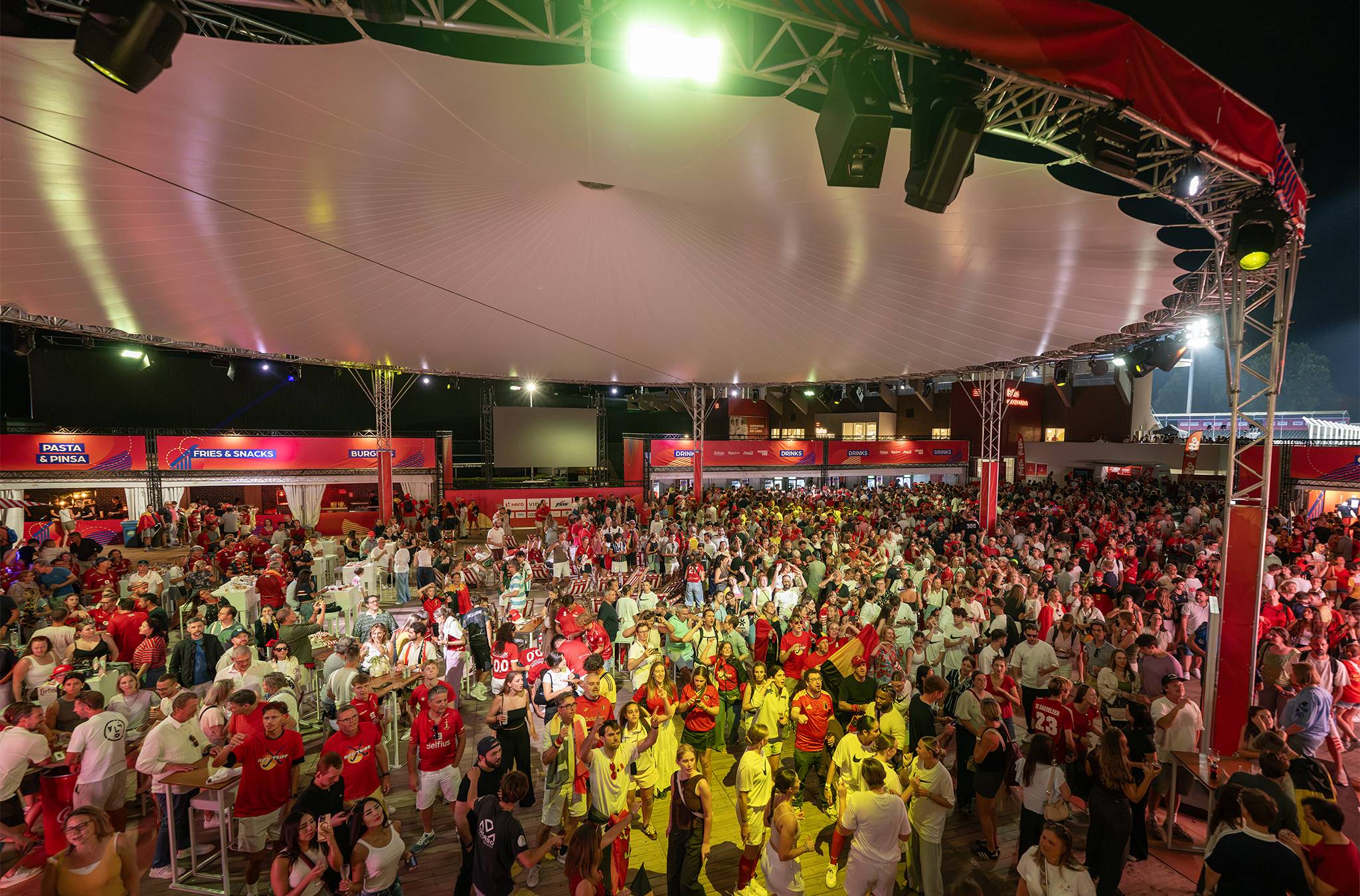
How do you increase festival bar revenue per visitor?
An average festival visit means 80 euros of spending on site.
That's what Test Aankoop found in a survey of people who went to a festival last year.
What that is at your festival depends on your audience, length and prices.
But above all on how quickly visitors get their drink.
Our advice: first measure your spend per visitor, per bar and per hour. Then work on queues, payment and stock.
- Spend per visitor is your bar revenue divided by your visitors.
- Queues and an extra top-up step cost you sales.
- A bar without stock sells nothing, not even at peak time.
- Sales per bar and per hour show where to adjust.
- To increase festival bar revenue, make ordering easier, not murkier.
What is the average spend at a festival?
People who went to a festival last year spent 212 euros on average, according to Test Aankoop's 2026 festival guide. Of that, 100 euros went on tickets and 80 euros on spending on site.
That comes from a survey of 1,573 Belgians, published on 17 June 2026.
It's an average across all kinds of festivals.
A one-day village party and a four-day festival can sit far from it.
Here's how to work out your own figure:
- Revenue on site: all sales at bars, food stands and partners, excluding crew credit.
- Visitors: per day, not per edition, if people come for several days.
- Divide: revenue divided by visitors gives your spend per visitor per day.
Then split that figure per bar and per hour.
Only then do you see where sales slip away.
In 30 minutes we'll show you how to track sales per bar and per hour and where to adjust during the festival.
Where do you lose sales at a festival?
You lose sales wherever visitors have to wait or think before they can order.
- The queue: anyone queuing too long between two sets skips a round. Causes and fixes are in long queues at the bar.
- The top-up step: first queue to top up, then queue at the bar. That's two queues for one drink.
- The empty bar: a tap that runs dry at peak time sells nothing.
- Unclear prices: anyone who doesn't know what a coin costs starts calculating or hesitating.
On that last point the public is clear: 64% say festival coins make it harder to track spending, according to the same survey.
How do you increase festival bar revenue per visitor?
Make ordering faster and easier, not more expensive. Four levers:
| Lever | What you measure | Where you adjust |
|---|---|---|
| Queue | Transactions per device per hour | Extra till or bar at peak |
| Payment | Share of card, cash and credit | Own card at the bar |
| Stock | Sales per bar versus stock | Restock before the peak |
| Offer | Sales per product per hour | Promo or menu per hour |
Paying without an extra step: almost 70% of festivalgoers prefer to pay with their own bank card or smartphone, Test Aankoop reports. With open loop or hybrid payment, that works at every bar.
Topping up in advance: if you do use a card, let visitors top up online. At Lokerse Feesten, more visitors topped up online, and things moved faster at the bar.
Tills at peak time: at the Student Kick-off Ghent, all bars run at full capacity between 8 pm and 12:30 am.
Plan your staffing around your own peak.
Live stock: at Bollekesfeest, a dashboard turned sales data into stock levels per bar in real time.
The bars never ran out of stock.
How to get those figures in one system is shown in our cashless payment system for festivals.
Which data do you need to adjust?
You need sales per bar, per device and per hour, live during the festival.
- Per hour: shows your peak and the hours when a bar goes quiet.
- Per device: shows which till is overloaded and where to add a device.
- Per product: shows what sells and what to drop next time.
- Crew separate: internal credits for crew and partners don't count as revenue.
This is about sales figures, not people.
How to use data within the privacy rules is covered in using your festival's sales data.
How do you raise revenue without losing visitors?
By making it easier, not by making visitors load more than they want.
Minimum amounts and balances that can't be used up add revenue on paper. But most festivalgoers want to choose exactly how much they top up, and Test Aankoop has criticised minimum amounts for three years.
What the rules say is in our article on the code of conduct for festival payments.
Beyond Ordering has become an indispensable part of our festival in just a few years. The terminals are incredibly reliable, easy to use, and a real game changer for our bar and cash desk teams. The support, from start to finish, is outstanding. Highly recommended!

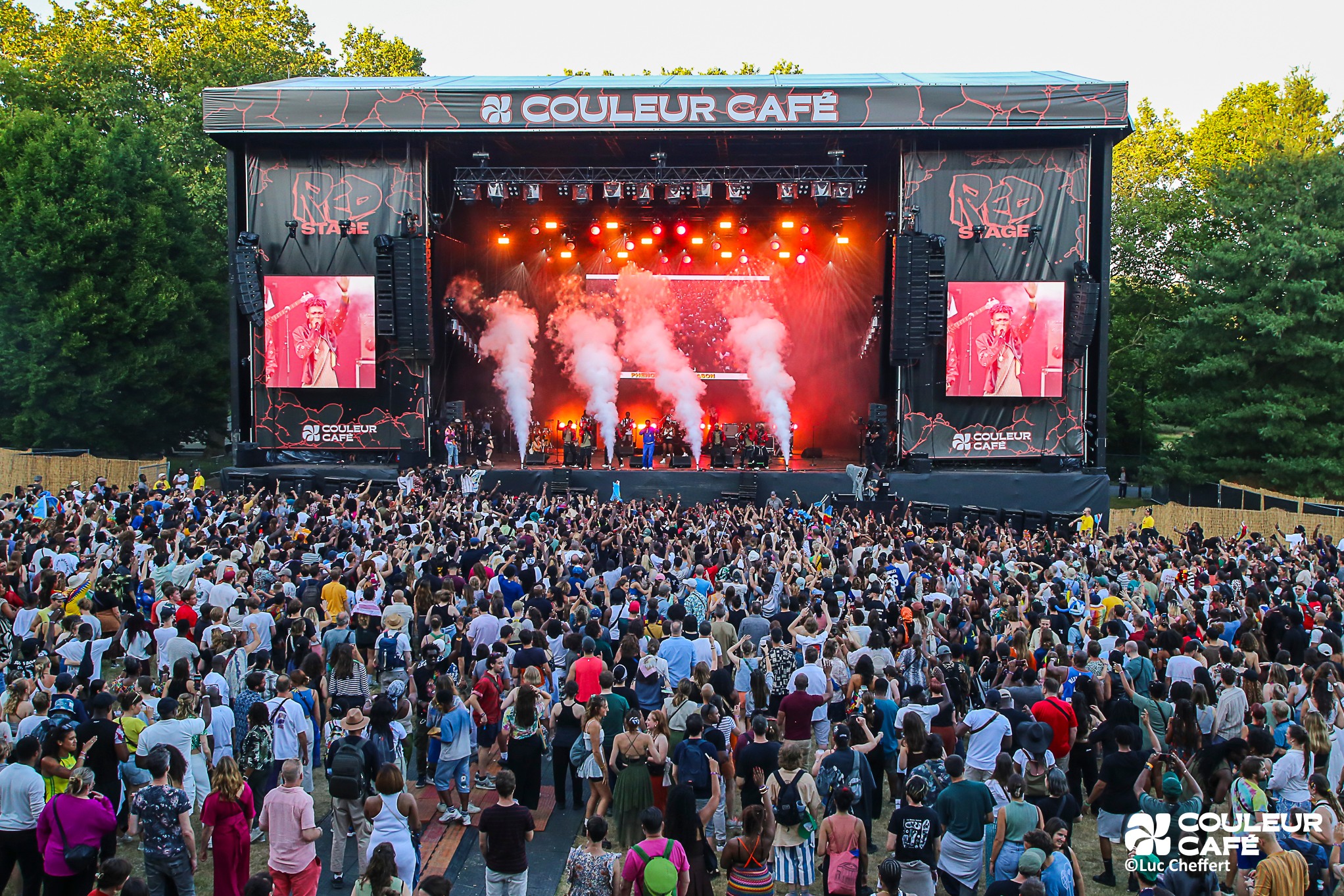
In practice: Couleur Café
The event: an established name on the Belgian festival scene, with Beyond Ordering since 2023. Editions sell out and space is fixed, so visitor numbers are fixed too.
The challenge: margins are under pressure from extra rules and rising production costs. Extra spend per person is a focus every year.
The setup: direct ordering and payment with Bancontact Pay at every bar (21), all-in-one terminals at the voucher tills and real-time monitoring to redirect staff at tills and bars.
The result: visitors ordered faster and more often. Bancontact Pay payments at the bar grew, easing the pressure on the voucher tills.
Also with Beyond Ordering: Lokerse Feesten, Bollekesfeest, Student Kick-off Ghent and Sinksen Kortrijk.
Frequently asked questions
Do crew drinks count towards spend per visitor?
No. Keep crew and partner credits separate, or your spend looks higher than it is.
Does cashless always raise spending?
There's no fixed figure that holds for every festival. Measure your spend per visitor before and after a change, per bar and per hour.
Should I raise my prices to make more revenue?
That's a different choice from selling more. How to build a price is covered in setting drink prices at a festival.
Can I track spending during the festival?
Yes, with a live dashboard per bar and per device. That way you adjust while there's still time.
Measure your spend per visitor at your next edition
Work out this year's figure, per day and per bar. Then pick one lever to tackle first.
In a 30-minute demo we'll show you how to track those figures live. Rather ask a question first? Get in touch.
Your spend per visitor, live
In 30 minutes we'll show you how to track sales per bar and per hour live, and where to adjust.
Read more stories from our blog
Opening a summer bar: what do you sort out first?
Opening a summer bar starts in winter: first the site, then the KBO, FAVV, a drinks licence and a till that takes both cash and card.

Single-use cup ban in Belgium: which cups are still allowed in 2026?
The single-use cup ban in Belgium: what's still allowed at events, in your café and for takeaway? Flemish, federal and EU rules side by side.

Several bars in one venue: how do you track stock and sales per bar?
Running several bars in one venue? Track stock and sales per bar: each bar its own sales point, log transfers and count at closing against the report.