Event run sheet: how do you build one, with an example?
Status on 13 November 2026: permit deadlines differ per municipality in Belgium. The example below comes from the City of Ghent, checked today.
An event run sheet says who does what, when and where.
It's one document for the whole team: a timeline, a contact list and a plan for when things go wrong.
The bar and payments deserve their own chapter, because that's where your revenue is.
Our advice: build your run sheet around times and owners. Every line has one name, never "we".
- A run sheet has three parts: preparation, the day itself and afterwards.
- Every task gets one owner and a deadline.
- Put permits first: your municipality sets the deadlines.
- Write down scenarios for network, power, rain and shortages.
- The bar and payments chapter only ends at the settlement.
What goes into an event run sheet?
A good run sheet answers five questions. What happens, when, where, who does it, and what if it goes wrong?
- Contact list: every lead with a mobile number, suppliers included.
- Timeline: from the first permit application to the evaluation, in weeks, and in hours on the day itself.
- Site plan: bars, tills, top-up points, power and emergency exits on one plan.
- Roles: who decides when there's a problem, per area.
- Scenarios: what do you do when something fails?
A spreadsheet or a shared document both work. Pick whatever your team can open on a phone during the build-up.
In 30 minutes we'll show you how the preparation of your tills and payments runs, step by step.
What does a run sheet for the bar and payments look like?
Here's the chapter, from choice to settlement. The steps follow the process Beyond Ordering runs when it sets up a cashless payment system for festivals.
| When | What | Who |
|---|---|---|
| Months ahead | Choose payment system, tailored proposal | Organiser and supplier |
| After choosing | Kick-off, payment partner onboarding | Finance lead |
| Weeks ahead | Price lists per bar, devices per location | F&B lead |
| Final days | Dry run, bar team briefing | Bar leads |
| Event day | Start-up, live monitoring, closing | F&B lead |
| Afterwards | Reports, settlement, evaluation | Finance lead |
Plan the onboarding with the payment partner in good time. It includes an identity check (KYC).
Which permits go into your run sheet?
That depends on your municipality and on where your event takes place. Check with the events office and put the deadlines in your timeline.
In Ghent you apply for an event on public land at least six weeks ahead.
An event in a hall or on private land is reported to the police at least four weeks ahead.
Those are Ghent's deadlines. Other municipalities set their own deadlines and forms.
Ghent also asks for a site plan and, if food trucks are coming, their inspection certificates for gas, electrics and fire extinguishers.
Sabam and the fair remuneration for recorded music are handled with one licence through Unisono.
Deposits, return points and washing are covered in our guide to reusable cups.
Which scenarios should you write down for the bar?
For each scenario, write down what happens in the first three minutes and who decides. These four belong in every run sheet.
- The network drops: Beyond Ordering terminals run on wifi, with a 4G SIM card and offline buffering as back-up. Read also wifi at your event.
- The power fails: know which devices run on battery. Mobile terminals last up to 14 hours, according to the hardware page.
- It rains: contactless-only terminals have no card slot, which makes them sturdier in the rain.
- A bar runs dry: agree who watches the dashboard and who restocks.
Who decides what on the day?
Name one decision-maker per area. On the day there's no time to confer.
- Food & beverage: bars, stock, price lists and cups.
- Finance: cash, top-ups, refunds and settling with partners.
- Partnerships: sponsors, exhibitors and credits.
- Communications: what visitors hear when something fails.
Put your suppliers' support lines on that list too. With Beyond Ordering, live 24/7 WhatsApp support is standard, and you can add on-site support.
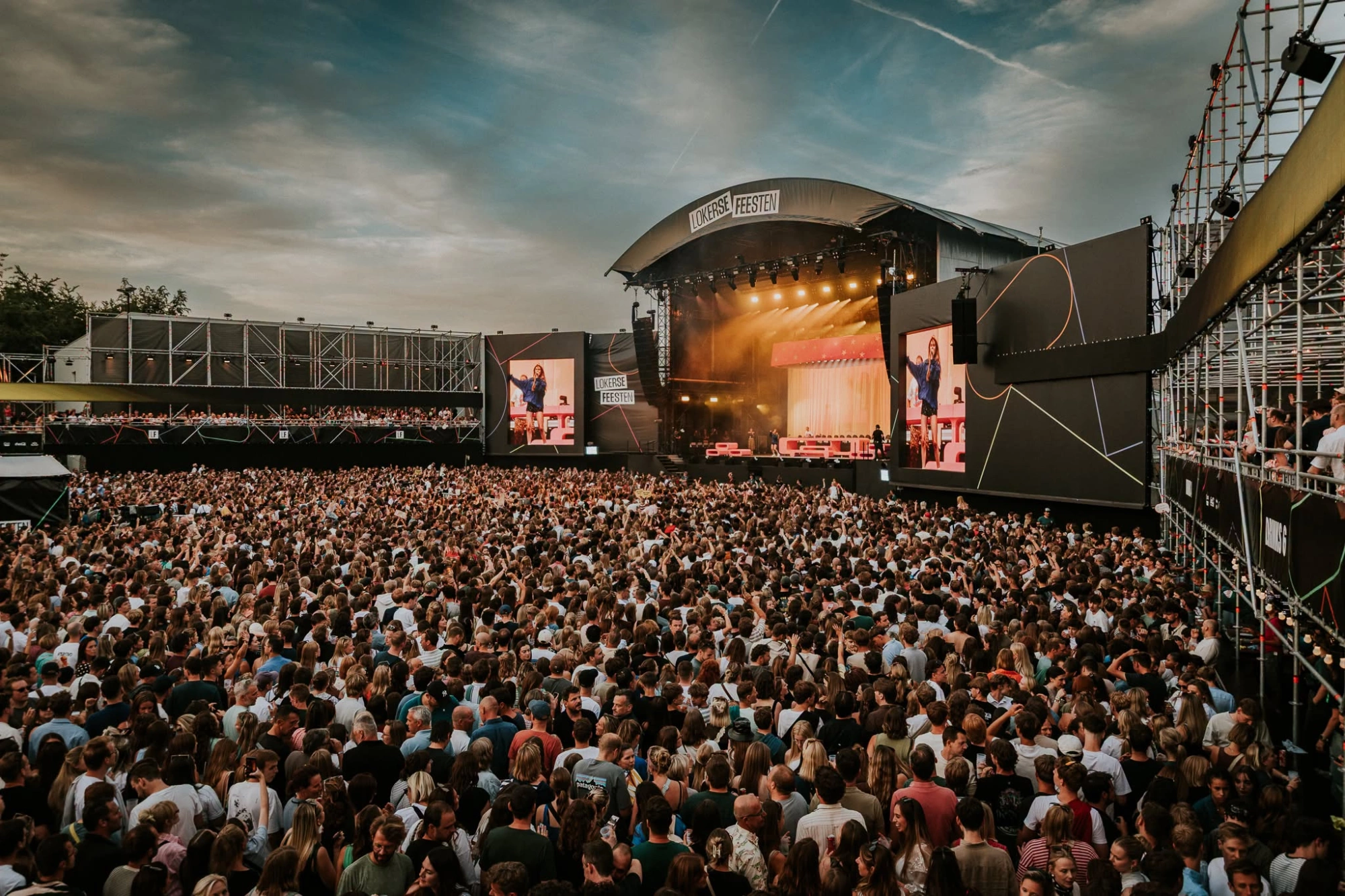
In practice: Lokerse Feesten
The event: ten festival days with 135,000 visitors.
The challenge: the organisers wanted one platform that talks to ticketing and to their own crew platform.
It had to keep working if the network or power went out.
The setup: Beyond Ordering designed the architecture with the core team: Food & Beverage, Finance, Partnerships and Communications.
Everything on site runs closed loop, offline first.
Every card has one QR code with three ways to top up, and the crew platform sends daily credits based on the schedule.
The result: more visitors topped up online and bar service was faster. The support desk got noticeably fewer questions.
That core team is your run sheet's division of roles: one area, one owner.
Also with Beyond Ordering: Couleur Café, Student Kick-off Ghent, Bollekesfeest and Sinksen Kortrijk.
Frequently asked questions
Is a run sheet required for an event?
Not as such, but your municipality can ask for documents such as a site plan.
A run sheet bundles them and keeps your team aligned.
When should you start your run sheet?
As soon as your date and venue are fixed. The permits then set your first deadlines.
Who keeps the run sheet up to date?
One person owns the version, and the area leads fill in their chapter. Put the date of the last change at the top.
What's the difference between a run sheet and a checklist?
A checklist says what has to happen. A run sheet also says when, by whom and what you do if it goes wrong.
Fill in the bar and payments chapter today
Take the table above, add your own dates and names, and plan your dry run.
Want to know how the preparation of your tills and payments works in practice?
In a 30-minute demo we'll show you. Rather ask a question first? Get in touch.
Your bar and payments in the run sheet
In 30 minutes we'll show you how the preparation runs, from kick-off and dry run to the report afterwards.
Read more stories from our blog
Opening a summer bar: what do you sort out first?
Opening a summer bar starts in winter: first the site, then the KBO, FAVV, a drinks licence and a till that takes both cash and card.

Single-use cup ban in Belgium: which cups are still allowed in 2026?
The single-use cup ban in Belgium: what's still allowed at events, in your café and for takeaway? Flemish, federal and EU rules side by side.

Several bars in one venue: how do you track stock and sales per bar?
Running several bars in one venue? Track stock and sales per bar: each bar its own sales point, log transfers and count at closing against the report.