Reusables: Deposit or Eco-token? The 3 Strategic Routes

Why a cup strategy is essential
Since the introduction of mandatory reusable cups at events and pop-ups, the focus has shifted from whether you organize it, to how to keep it operationally and financially viable. Without a robust strategy, reusables quickly turn into a major cost.
As an organizer or event manager, you absolutely do not want to be confronted with these four hidden bottlenecks after the weekend:
High attrition
Large quantities of cups that get damaged or disappear without a trace (and for which you have to compensate the supplier).
Refund fraud
Improper refunds paid out at the bar due to chaos or lack of control.
Operational delays
Long queues due to an overly complex collection system at the bar.
Staff costs
Hours of extra work for the crew due to unstructured logistics.
In short: extra costs and extra hassle. To prevent this, most organizations choose one of the following three strategic routes.
Option 1: The Ideal World — Value = Respect (No monetary value)
In this scenario, you don't put a price tag on the cup. The visitor receives their drink in a reusable cup, and the organization trusts that the cup will be returned neatly to the bar or a collection point.
The conditions
This primarily works in enclosed areas with a specific entry policy and a target audience with high social and ecological awareness.
The approach
Success depends on clear passive and active awareness campaigns and easily accessible collection points.
The role of data
Since no money is involved, you need to keep a close eye on things via the POS system. By matching real-time insights into your sales with the current stock at the bar, you can immediately see where cups might be disappearing out of sight.
The practice
Market data from large-scale events shows that festivals adopting this approach manage to 200,000+ cups to rotate with less than 0.4% damage or loss. However, this is only possible if operations and monitoring are watertight.
Option 2: The Eco-token System — Value only upon loss
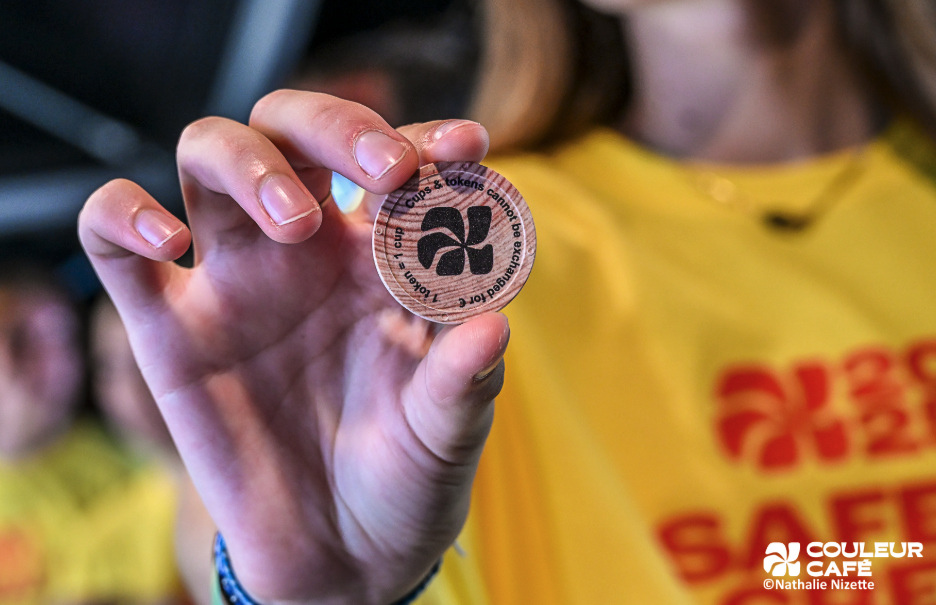
This is currently the most chosen system at large commercial festivals. The cup has no purchase value and no residual value (cashback), but the visitor does need a 'key' to get a cup: the Eco-token.
How it works
Each visitor receives 1 free Eco-token at the entrance. At the bar, you exchange this token for a cup. Next order? Return cup = new cup. Lost your cup? Then you pay a penalty (extra cost) to get a new token or a new cup. So, there's only an extra cost upon loss.
The Critical Point (Money Time)
Since the last cup at the end of the evening no longer has any monetary value for the visitor, the littering risk looms. During the curfew (the final hours of the event), the loss risk increases exponentially.
The Solution
Deploy active ECO-teams in the later hours and work with targeted incentives for both your crew and visitors. Reward bar staff (linked to operator data in the till) for quickly and correctly collecting cups. Additionally, encourage visitors to help clean up by adding a gamification element; for example, reward them at a central recycling point with a free drink for every 20 cups returned. Finally, actively direct the remaining visitors at the exit to properly dispose of their last cup.
Option 3: The Fixed Deposit System — Always a Fixed Value
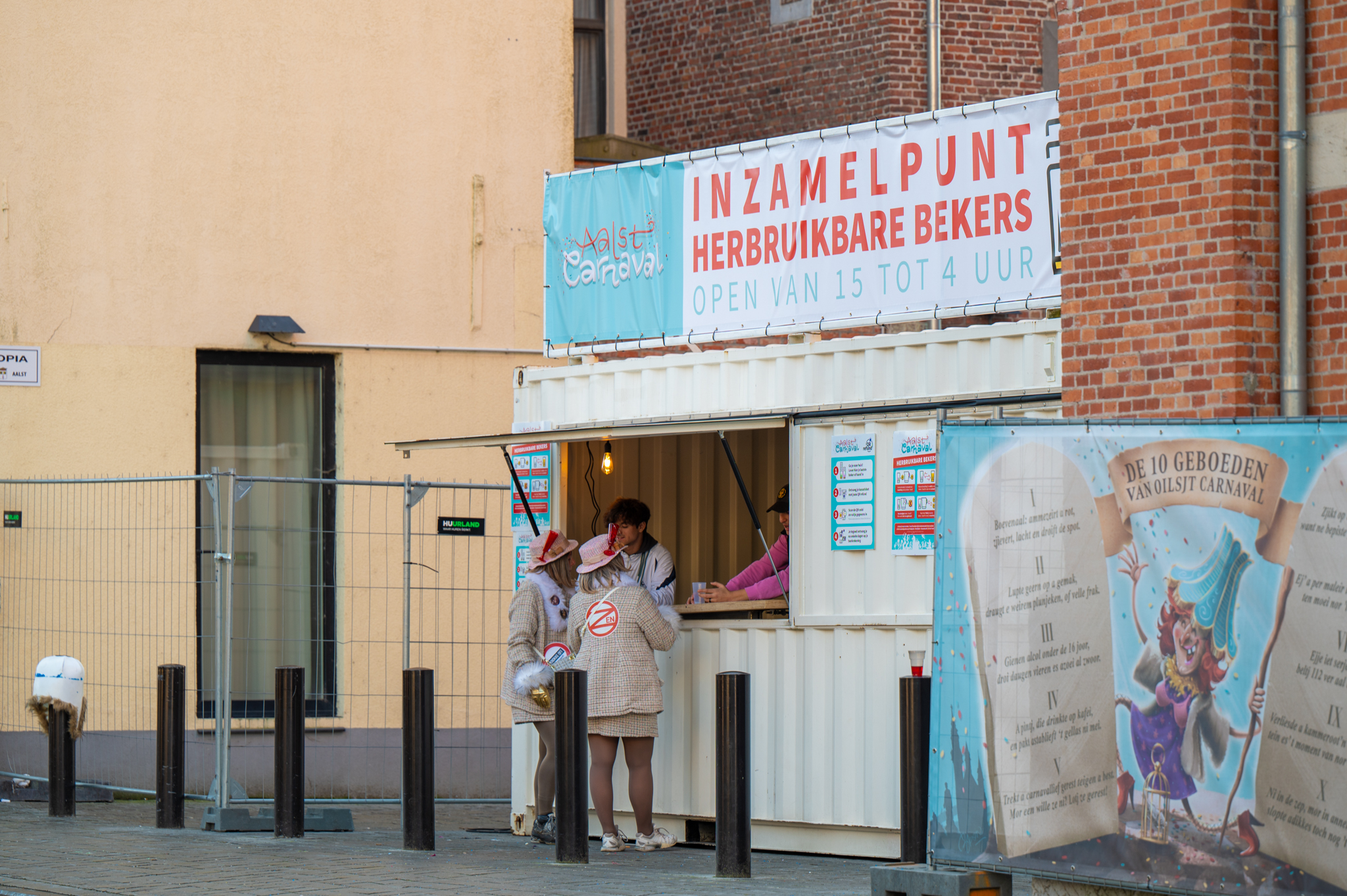
Here, the cup has a fixed monetary value upon purchase, exchange, and return (e.g., €1 deposit per cup). This strongly incentivizes visitors to return the cup, as it is literally worth money.
The Challenge
This system requires massive, centralized oversight. You need to flawlessly manage the type of reusables, inventory management, logistics, and refunds.
The Risk of Misuse
If a cup is worth money, 'cup theft' or poaching behavior can occur, where people snatch cups from tables to cash in refunds.
The Role of Technology
While offering free choice for sales is fine, you need a smart software platform to control misuse. By setting limits on the number of refunds per transaction or per till operator, you prevent money from wrongfully ending up in the pockets of 'cup hunters' at the bar.
Conclusion: Choose Your System, We Provide the Control
Whichever of the three options you choose for your event, one thing is certain: without real-time data, you're flying blind. Manual counts afterwards won't resolve the chaos during peak hours.
With the Beyond Ordering platform, you maintain full control. From monitoring real-time inventory per bar to securing your refund flows against fraud: we ensure that reusables don't become an extra cost or hassle, but a streamlined part of your ecological and financial success.
Read more stories from our blog
WiFi at your event? We got you covered!
Discover which VAT rates apply to food and drinks at your event

VAT rates at Belgian events
Discover which VAT rates apply to food and drinks at your event

Closed-Loop Payments with Beyond Ordering
Optimize your event payments with our cashless carriers