Event insurance in Belgium: which cover do you need as an organiser?
Status on 13 November 2026: the rules below come from Wikifin, the financial education platform of the FSMA, Belgium's financial regulator, from Vlaanderen.be and from the law of 30 July 1979, checked today. Policy terms and amounts differ between insurers.
Event insurance in Belgium mainly covers your civil liability as the organiser.
On top of that, you usually have to insure your volunteers. The rest depends on your event, your venue and your participants.
Our advice: take out organiser liability cover that includes set-up and breakdown. Then ask what your venue or site owner already insures.
- Organiser liability covers damage to others caused by your gear, installations or helpers.
- You insure volunteers for at least civil liability, unless you're an informal group with no staff and no umbrella body.
- Informal groups and non-profits without staff can use the Flemish government's free volunteer insurance.
- Insure the set-up and breakdown days too.
- Buy through an intermediary listed in the FSMA register.
Which event insurance in Belgium do you need?
At least organiser liability cover, plus insurance for your volunteers. Depending on your event, two more come in:
| Insurance | What it covers | Needed? |
|---|---|---|
| Organiser liability | Damage to others during your event | Recommended |
| Volunteers | At least their civil liability | Usually required |
| Participants | Their liability and bodily injury | Advised for sport or activities |
| Fire and explosion liability | Damage to others from fire or explosion | Required for certain venues, ask the owner |
In 30 minutes we'll show you how to keep cash away from your bars and see everything in one report.
What does organiser liability insurance cover?
The civil liability of everyone helping with your event: volunteers, members, speakers. That's how Wikifin puts it.
Wikifin's example: during a show, a piece of the set falls onto the front rows. The insurance covers material damage and injuries caused by gear, installations or staff.
Three things to know:
- Who for: individuals, informal groups and non-profits (vzw) running an event open to the public.
- How long: for a single event or a whole year.
- Which days: pass on the dates, and include set-up beforehand and breakdown afterwards.
An individual can add the cover to their family liability policy. An association or company does it through business liability insurance.
Do you have to insure your volunteers?
Yes, almost always. Belgium's Volunteers Act requires nearly every organisation to insure at least civil liability.
Only informal groups with no umbrella body are exempt, according to the Flemish volunteering support centre. If your group has staff, assume the duty does apply.
Exempt doesn't mean protected.
Without a non-profit or umbrella body, members are personally liable, a lawyer explained to VRT NWS. After a carnival float caught fire in a shed in Aalst in 2004, the members each paid €50,000.
When can you use the Flemish volunteer insurance?
If you're a non-profit or informal group with no staff, with your seat or representatives in Flanders or Brussels. An informal group also can't be tied to an umbrella body.
An organisation can insure up to 1,000 volunteer hours a year this way for free, per Vlaanderen.be (see the source at the top). It covers civil liability, legal assistance and personal accidents.
You first apply for a recognition number, and report your activities at least 24 hours in advance.
What else your volunteers need to know is in our guide to volunteers at your festival bar.
What about fire, the venue and the site?
The law of 30 July 1979 makes the operator of certain venues open to the public strictly liable for fire or explosion, and requires them to insure it. Which venues is set by royal decree.
Wikifin names cultural centres, sports halls, stadiums and exhibition spaces, among others. Whether that cover applies to your venue, the owner knows.
Renting a hall or site? Ask which cover is already in place.
Also agree who's responsible for tents, stages and power.
Which other permits you need is in our guide to your event permit in Belgium.
What should you ask your insurance broker?
Don't just ask about the price, ask what happens in your scenarios:
- Cancellation: what if your event can't go ahead because of weather or an authority's decision? Is that in the policy, or do you need a separate one?
- Rented equipment: are tap systems, tents and terminals covered for damage or theft?
- Money: is cash in your tills and in transit insured, and up to what amount?
- Participants: does the policy cover injuries to people taking part, or only damage to others?
- Period: are set-up and breakdown included?
Insurance intermediaries must register in the FSMA register, Wikifin explains. You'll find the list on the FSMA website, under Lists.
How do you cut the risk at your bars?
With less cash on your site. The less money at the bars, the less can go missing or be miscounted.
Visitors pay by card or phone. Those who want to use cash go to one central point.
A cashless payment system for festivals keeps all sales in one report that way. How cash and cashless work together is covered in cashless payments and cash.
In practice: Brugge Plus
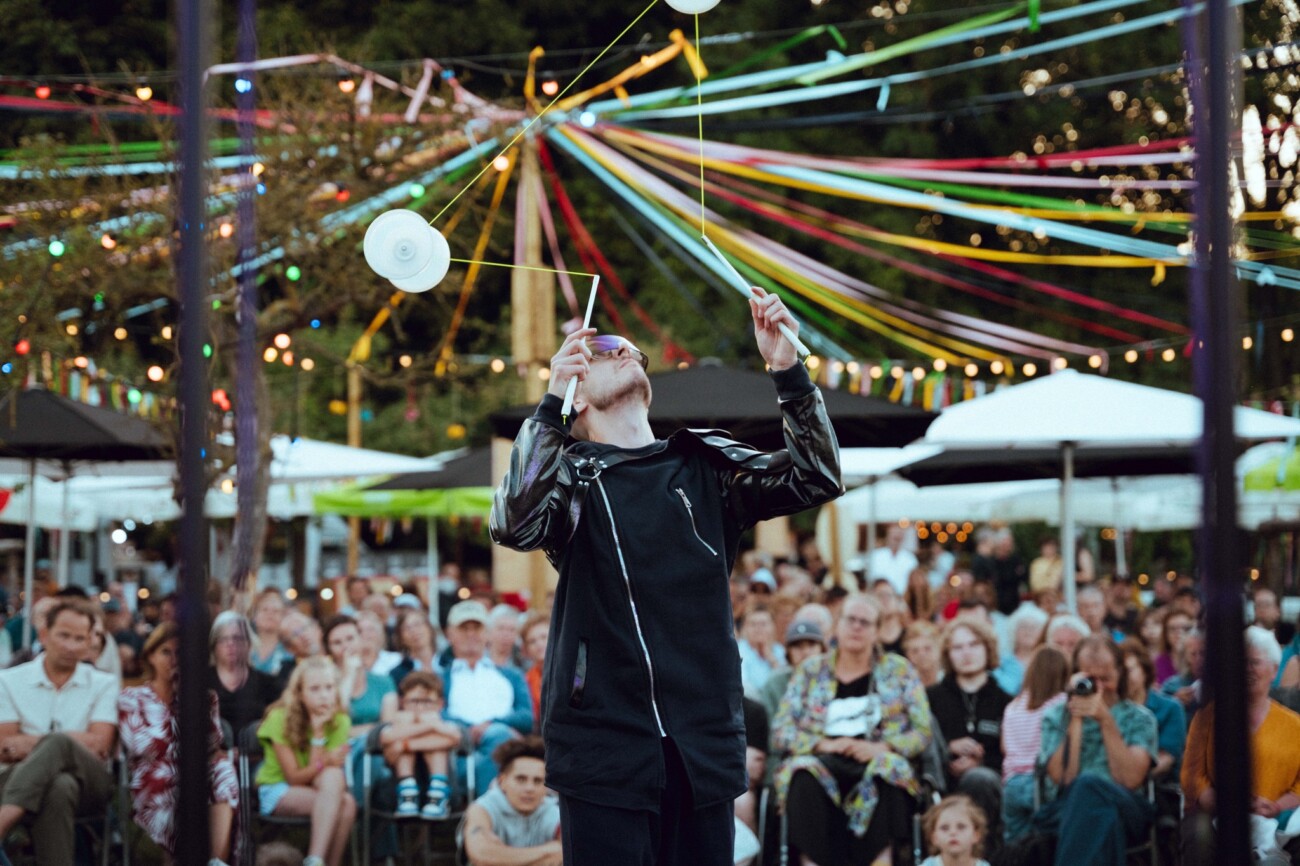
The event: city festivals such as Feest in 't Park and Cirque Plus, with a broad and diverse crowd.
The challenge: a payment system that cuts bar waiting times, yet stays accessible to people who prefer to pay cash.
The setup: visitors paid at every bar or food stand with their own bank card, credit card or wallet.
Cash payers got one secure, central till. There they swapped cash for a cash card with a unique QR code.
The result: no more loose cash at every bar, and complete sales and stock records for settling up with external vendors.
Also with Beyond Ordering: Crelan 3x3 Europe Cup, Student Kick-off Ghent, Sinksen Kortrijk and Lokerse Feesten.
Frequently asked questions
Is event insurance compulsory in Belgium?
Wikifin recommends organiser liability cover, but doesn't call it compulsory. Insuring your volunteers is compulsory for almost every organisation.
Does your family liability policy cover an event?
Sometimes: an individual can add organiser liability to their family policy. Check with your insurer beforehand, not after an accident.
Can you insure a single event?
Yes, organiser liability cover exists for one event or a full year. For a yearly festival with set-up days, compare both.
Who's liable in an informal group?
The members themselves, because there's no non-profit or umbrella body above the group. VRT NWS concludes: organise through a non-profit where possible.
Call your broker with this list
Have your dates, your venue and your number of volunteers ready, and go through the five questions above.
Want to see how to keep cash away from your bars? In a 30-minute demo we'll show you. Rather ask a question first? Get in touch.
Less cash, less risk
In 30 minutes we'll show you how to keep cash away from your bars and see everything in one report.
Read more stories from our blog
Opening a summer bar: what do you sort out first?
Opening a summer bar starts in winter: first the site, then the KBO, FAVV, a drinks licence and a till that takes both cash and card.

Single-use cup ban in Belgium: which cups are still allowed in 2026?
The single-use cup ban in Belgium: what's still allowed at events, in your café and for takeaway? Flemish, federal and EU rules side by side.

Several bars in one venue: how do you track stock and sales per bar?
Running several bars in one venue? Track stock and sales per bar: each bar its own sales point, log transfers and count at closing against the report.