Staff shortage in hospitality: how do you keep service up with fewer hands?

You don't solve a staff shortage in hospitality by running faster.
You change who does what. Guests order and pay at the table themselves, your team prepares and serves.
At Zomerbar Bloom that meant over 25% fewer terrace staff.
Our advice: take order taking and payment off your waiters' list first. Those are the minutes you miss most on a busy terrace.
- Waiter, bartender, cook and kitchen assistant are on the VDAB 2026 shortage list.
- Weekend and evening work also make finding candidates harder, VDAB says.
- Let guests order and pay at the table, and turn waiters into runners.
- Keep a person for groups, regulars and open tabs.
- Plan staffing on live sales figures, not gut feeling.
How big is the staff shortage in hospitality?
Big and stubborn. VDAB, the Flemish employment service, counts 227 shortage occupations in Flanders in 2026, and hospitality staff remain a "fixture" on that list.
These are the café and restaurant jobs on it:
| Where | Shortage jobs 2026 |
|---|---|
| Floor | Waiter, assistant waiter, bartender, maître d' |
| Kitchen | Cook, assistant cook, chef de partie, kitchen assistant |
| Management | Hospitality manager |
Across all shortage occupations, VDAB doesn't put it down to a lack of candidates alone.
Weekend and evening work and part-time contracts also make finding candidates harder.
In 30 minutes we'll show you how guests order and pay at the table while your team prepares and serves.
Which tasks can you split differently?
Everything that runs back and forth between guest and bar.
A waiter does four things in an evening, and the guest can do two of them.
- Taking the order: the guest picks on their phone.
- Settling the bill: by default the guest pays upfront, so no asking for the bill and bringing it back.
- Preparing: stays with bar and kitchen.
- Serving: stays with your team, now as runners.
Every order that skips a waiter is also an order nobody can copy down wrong.
How does table ordering work with fewer staff?
The guest scans a code on their table, orders and pays, upfront by default.
The order goes to the right station on its own.
Step by step, with the Belgian GKS rule, is in ordering via QR code in your bar or restaurant.
For staffing, this is what counts: you need fewer people taking orders, and more preparing and running.
When do you still keep a waiter in the flow?
For guests who want to see someone, for groups and for your regulars.
- Groups on a tab: a staff member opens the tab on the terminal, the group pays at the end.
- Regulars: they often prefer ordering at the bar or from someone they know.
- Guests without a phone or the wish to use it: your team helps them at the bar or table.
Run those orders through the same system as the QR orders.
Then your evening stays in one report, as our POS system for hospitality guide explains.
How do new staff get up to speed fast?
With one screen and one way of working, for everyone. Cafés run on students, flexi-jobbers and seasonal staff.
The fewer buttons a new hire needs to know, the sooner they can run a shift alone.
Give every staff member their own login.
You'll see who sold what after closing, and you're covered if the GKS applies, see our GKS 2.0 explainer.
How do you plan staffing with figures?
On your sales per hour. Know when the peak comes and put your people there.
- Look per hour: when do most orders come in?
- Look per station: is the bar or the kitchen working hardest?
- Adjust live: what's running out, and where does it jam?
That way you plan next week on facts rather than feel.
Our guests order online by scanning the QR codes on the tables. Orders are automatically split between our bar and kitchen, allowing us to serve our guests much faster and more efficiently.

In practice: Zomerbar Bloom
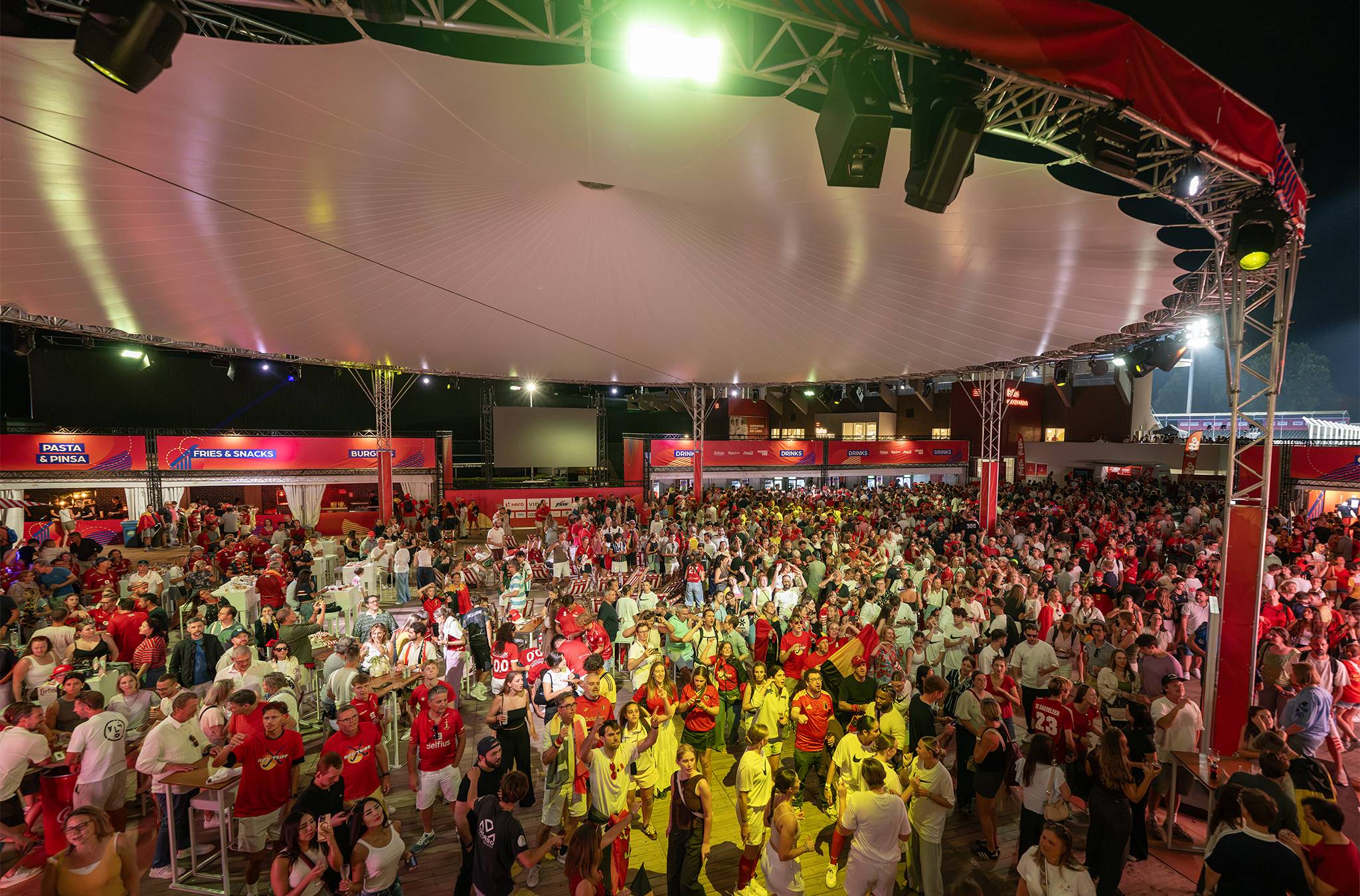
The event: a summer bar with a terrace that fills up fast, a bar and a kitchen.
The challenge: organising staff on the floor efficiently. Guests waited long for a waiter, orders got mixed up and open tabs didn't add up at night.
The setup: every table has its own location-aware QR code. Orders are split between bar and kitchen automatically, and runners only deliver. Guests who prefer a waiter still get one.
The result: over 95% of orders run through the QR flow, with over 25% fewer staff on the terrace (Zomerbar Bloom story).
Also with Beyond Ordering: Bar Bernaar, Het Paviljoen, Bar Provisoir and KapAlpen.
Frequently asked questions
Why is there a staff shortage in hospitality?
For shortage occupations in general, VDAB names too few candidates, a mismatch in skills and experience, and working conditions. Weekend and evening work make finding candidates harder.
Can a café work without waiters?
Rarely completely. With table ordering you do need fewer people taking orders and more serving.
Do guests need to download an app to order at the table?
Not with Beyond Ordering. The code opens the menu in the phone's browser, where the guest orders and pays.
Does table ordering work indoors too, not just on the terrace?
Yes. You give every table its own code, inside or out, and ordering at the bar can simply stay.
Start with one terrace and one busy night
Put codes on your terrace tables, turn one waiter into a runner and look at your figures after closing. See how that works in a café or club with our ordering and payment system for hospitality and clubs.
Want to see what that looks like for you? We'll show you in a 30-minute demo. Rather ask a question first? Get in touch.
Less order taking, more serving
In 30 minutes we'll show you how guests order and pay at the table while your team prepares and serves.
Read more stories from our blog
Opening a summer bar: what do you sort out first?
Opening a summer bar starts in winter: first the site, then the KBO, FAVV, a drinks licence and a till that takes both cash and card.

Single-use cup ban in Belgium: which cups are still allowed in 2026?
The single-use cup ban in Belgium: what's still allowed at events, in your café and for takeaway? Flemish, federal and EU rules side by side.

Several bars in one venue: how do you track stock and sales per bar?
Running several bars in one venue? Track stock and sales per bar: each bar its own sales point, log transfers and count at closing against the report.