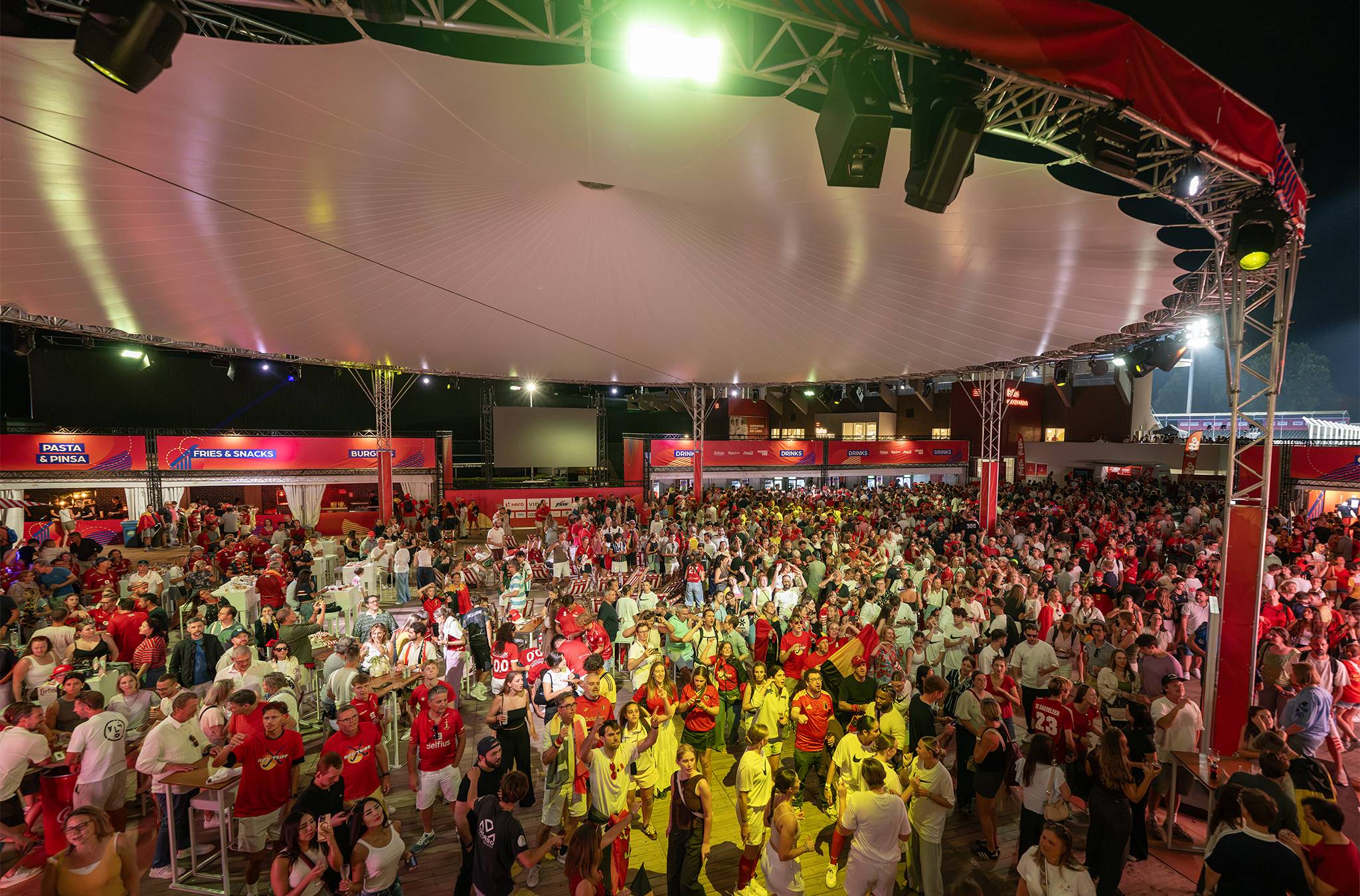
When card terminals fail at a festival: how to keep your bar selling
A terminal that can sell offline keeps your bar open when the network drops.
When card terminals fail at a festival, it's rarely bad luck. Thousands of phones share one network.
Our advice: build your connection in layers and pick a system for the bars that keeps selling without a network. Test it before the gates open.
- A terminal depends on the network, power and the payment provider.
- Your own network, separate from the public mobile network, is the base.
- A 4G SIM card in every terminal catches a wifi outage.
- Offline closed loop writes every purchase to the card, even without a network.
- A plan B on paper saves you chaos at the busiest moment.
Why do card terminals fail at a festival?
There are four weak spots, and none of them sits in the device itself.
- The mobile network fills up: your visitors film, post and stream on the same masts as your terminals. Each mast can only handle a limited number of connections at once, CallMePower explains (in Dutch): at a festival, density is the problem, not the signal.
- The wifi doesn't reach far enough: one access point next to the stage desk won't cover the bar at the back.
- The power fails: a generator stops, or a battery runs flat at the end of a long day.
- The payment provider goes down: on 30 March 2026, it was impossible to make electronic payments across Belgium for over an hour, VRT NWS reported.
You can't fix that last one on site. You do choose how much your bars depend on it.
In 30 minutes we'll show you how a terminal switches to 4G, what the offline buffer does and how you follow every device live.
What does an offline card terminal do at a festival?
What a terminal can still do without internet depends on your payment system.
| Payment system | Where's the money? | Without a network |
|---|---|---|
| Offline closed loop (card, wristband) | On the cashless card | Payments keep working |
| Open loop (bank card, phone) | At the bank | Ask your supplier |
| Hybrid | Both | Differs per payment method |
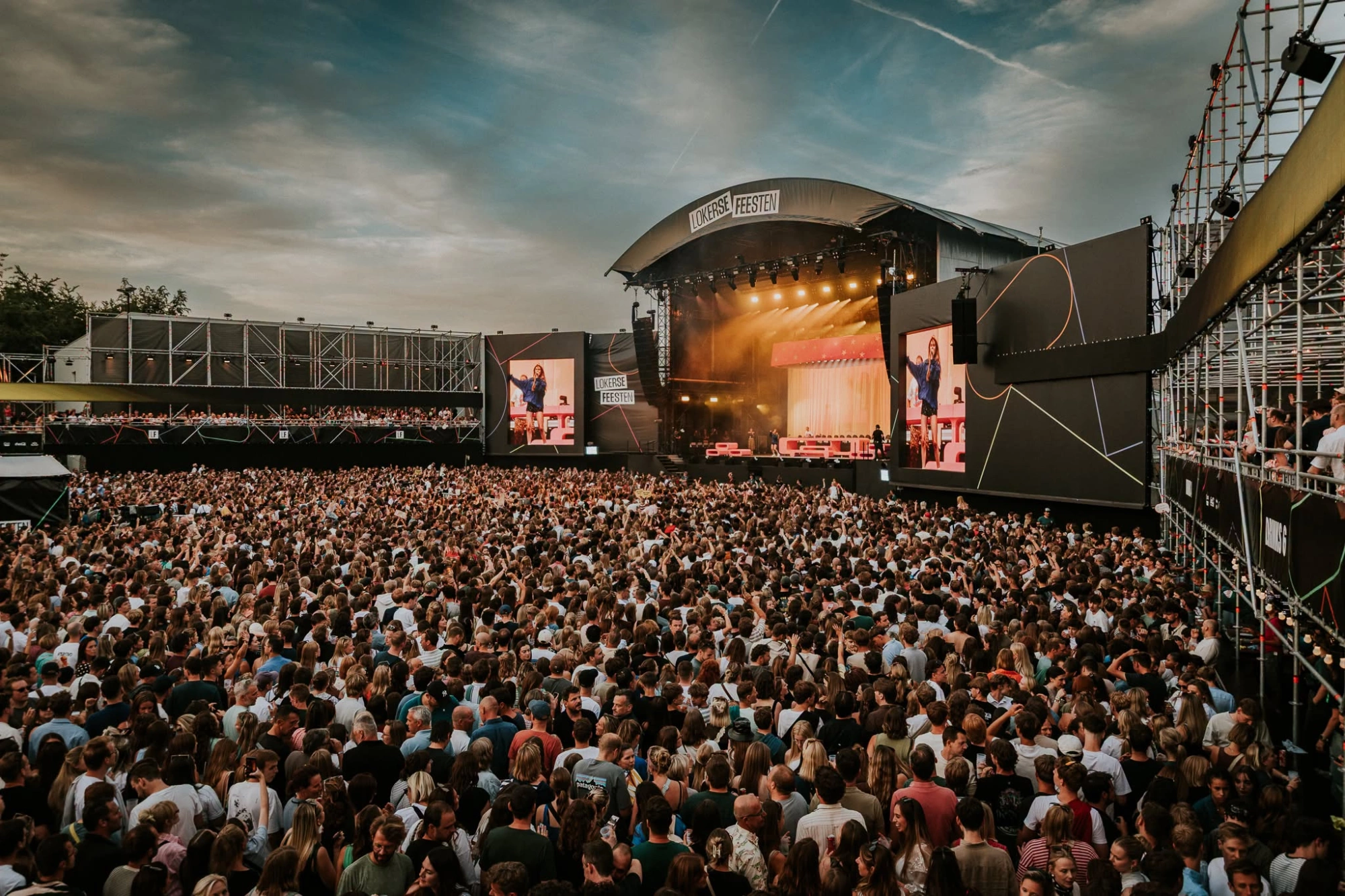
Offline closed loop: at Lokerse Feesten, every top-up, purchase and refund goes straight onto the card. That keeps payments working, even if the network goes down.
Open loop: the payment runs through the payment provider and your visitor's bank. Ask your supplier in writing what their terminal does when the connection drops.
If the terms are new to you, read open loop, closed loop or hybrid payments.
How do you build a network that holds up?
You build it in layers: a main connection, your own wifi per zone, 4G in every terminal and an offline buffer as a safety net.
- Main connection: a fixed line if there is one, otherwise Starlink or a 5G modem. At 12 Inch Lovers, the network runs fully separate from the regular mobile network.
- Own wifi per zone: access points are placed from the site plan and the expected crowd at each location.
- 4G in every terminal: if the wifi drops, the device switches to its own SIM card. That's how it ran at the Tall Ship Races in Antwerp.
- Offline buffer: the platform has an offline buffer, so you stay operational when the internet connection drops. At the Tall Ship Races, the app also kept working offline.
Public wifi is a separate project. Beyond Ordering's connection is only for ordering and paying, see wifi at your event.
What if the power fails?
A mobile terminal runs up to 14 hours on its battery, so a power cut at the bar doesn't stop sales straight away. Stand terminals run on mains power, with extra long charging cables.
- Charging plan: a charging case holds and charges up to 20 mobile terminals.
- Swaps: keep spare terminals at the busiest bars, not backstage.
- Long days: plan charging between two shifts, so nobody's left with a flat battery at midnight.
All specs are on the page about our terminals and hardware.
What's your plan B if something still goes wrong?
Your plan B is a short list everyone at the bar knows: who to call, where the spare devices are and what to tell the queue.
- One number: everyone knows who to call. With Beyond Ordering, that's the 24/7 WhatsApp support.
- Live monitoring: the monitoring app shows battery and connection per device.
- Spare devices: one charged terminal per zone, set up with the right price list.
- One line for the queue: "Bear with us, we're switching over."
How do you test the network before your festival starts?
Test where and when it gets heavy: at the busiest bar, with every device switched on at once.
- Dry run: switch on every terminal in its own spot and make a test sale.
- Wifi off: turn off the wifi and check that every terminal moves to 4G.
- Connection off: put a device in airplane mode and see what it still sells.
- Report: check afterwards that every test sale shows up in the reporting.
In practice: Lokerse Feesten
The event: ten days of festival in Lokeren, with 135,000 visitors.
The challenge: the organisers wanted one platform that talks to ticketing and their own crew platform, and keeps working if the network or power goes out.
The setup: everything on site runs closed loop. Every top-up, purchase and refund goes straight onto the cashless card, and visitors follow it all in an online wallet. At the edge of the site, terminals took bank cards and hybrid payments.
The result: more visitors topped up online, bar service was faster and the support desk got noticeably fewer questions.
The festival says so itself on its cashless info page (in Dutch): with the system, it doesn't depend on an internet connection.
Also with Beyond Ordering: Couleur Café, Bollekesfeest, 12 Inch Lovers and the Tall Ship Races.
Frequently asked questions
Does a cashless card work without internet?
In an offline closed-loop system it does, as at Lokerse Feesten, because every purchase sits on the card itself. Topping up through the QR code does need internet on your visitor's phone.
Do I need public wifi for cashless at my festival?
No. Your terminals need their own network, separate from what your visitors use.
What if the payment provider itself goes down?
Then bank card payments fail, as they did across Belgium on 30 March 2026. With offline closed loop, paying with the cashless card keeps working.
How long does a mobile terminal last on one battery?
Up to 14 hours. For a festival day that runs longer, plan a swap or a charging slot.
Get your network drawn up before the first bar opens
Put your site plan next to your bar plan and mark where the crowds will be. That's where your network starts.
Want to see what that looks like for your site? We'll show you in a 30-minute demo, or start with our cashless payment system for festivals. Rather ask a question first? Get in touch.
A network plan for your site
In 30 minutes we'll show you how terminals switch to 4G, what the offline buffer does and how you follow every device live.
Read more stories from our blog
Opening a summer bar: what do you sort out first?
Opening a summer bar starts in winter: first the site, then the KBO, FAVV, a drinks licence and a till that takes both cash and card.

Single-use cup ban in Belgium: which cups are still allowed in 2026?
The single-use cup ban in Belgium: what's still allowed at events, in your café and for takeaway? Flemish, federal and EU rules side by side.

Several bars in one venue: how do you track stock and sales per bar?
Running several bars in one venue? Track stock and sales per bar: each bar its own sales point, log transfers and count at closing against the report.