Alcohol licence for an event in Belgium: when do you need one?
Status on 13 November 2026: checked in the law of 28 December 1983 (articles 1 and 9), with the City of Ghent, the municipality of Schelle (information evening of 27 November 2025) and the FPS Finance scheme for alcohol traders. Your own town's regulations take precedence.
For beer and wine at an occasional event, you usually don't need an alcohol licence.
For spirits, cocktails and alcopops, you do ask the council (college van burgemeester en schepenen) for an authorisation.
Our advice: apply for the spirits authorisation together with your event permit, for all bars at once. Then check whether your food trucks and vendors need a licence of their own.
- Beer and wine at an occasional event: no licence, but you still notify the town.
- Spirits, cocktails and alcopops: an authorisation from the council.
- Occasional means, among other things: at most ten times a year and fifteen days.
- A mobile bar that isn't occasional needs its own drinks licence.
- Bottles to take away fall under the alcohol and tobacco trader licence since 2025.
Do you need an alcohol licence for an event in Belgium?
It depends on what you serve and who organises the event.
Two laws decide it: the one on outlets for fermented drinks of 3 April 1953, and the law of 28 December 1983 on the licence for spirits.
Article 9 of the 1983 law bans spirits at an occasional drinks outlet at a public event, unless the council grants a special authorisation.
The City of Ghent sums it up on its page about occasional drinks outlets:
- Only beer, wine and other fermented drinks: no drinks licence needed. You do notify the town or the police of your event.
- Spirits too, such as cocktails or a gin and tonic: a special authorisation from the council.
In 30 minutes we'll show you how to set up a price list per bar, with or without spirits.
When is your event an occasional drinks outlet?
When it meets four conditions, according to the City of Ghent:
- Temporary: it's an event of a passing nature.
- At most ten times a year: it doesn't take place more often.
- At most fifteen days: it lasts no longer than fifteen consecutive days.
- Run by an association: a club, society or private association organises it, for example a non-profit (vzw).
Exhibitions and trade fairs are always occasional, whoever runs them.
Under the 1983 law, commercial companies and for-profit unincorporated associations never qualify. Schelle also says a company running the bar itself is never occasional.
It needs a licence for a fixed or mobile drinks outlet.
How do you apply for a spirits authorisation?
As the organiser, with the town where your event takes place. In Ghent you do this through the application form for your event.
The Ghent spirits authorisation covers every drinks outlet of the whole event.
The application costs nothing, and the council decides freely.
Deadlines and documents differ by town:
| Town | Deadline | What it asks for |
|---|---|---|
| Ghent | Decision within 30 working days | Application form for your event |
| Schelle | At least 3 weeks ahead | Criminal record extract, statutes, location, duration |
In Ghent that period runs from the moment the application is declared admissible, and the city may need longer in exceptional cases. You receive the authorisation by registered letter.
Schelle lists the documents in its information evening on drinks licences: a criminal record extract (model 596.1), the identity of those responsible, the statutes, the location and the number of days.
What counts as spirits?
More than you'd think.
The municipality of Schelle counts every drink from 22% alcohol, and every drink with more than 1.2% distilled alcohol, as spirits.
- Spirits: vodka, rum, whisky, gin.
- Cocktails: including a gin and tonic.
- Alcopops: drinks with the flavour of spirits, such as a Breezer.
All of these also come with an age limit of 18.
How to check that at the bar is in age checks at the festival bar.
What about food trucks and vendors selling drinks?
A food truck or market stall that doesn't fall under the occasional scheme needs a licence for a mobile drinks outlet, says Ghent.
Schelle adds: a mobile bar applies for that licence in the town of its registered office, not in the town of your event.
In Ghent, the organiser's spirits authorisation does cover every drinks outlet of the event.
Agree in your contract with each vendor who brings which licence.
How to settle with vendors is in settling with vendors and food trucks.
What changed in 2025?
A new federal licence for anyone selling alcohol to drink elsewhere.
Since 1 May 2025, anyone selling alcohol at retail needs an alcohol and tobacco trader licence from FPS Finance.
It replaced three older permits and has been mandatory since 1 November 2025, says the City of Ghent.
- Drinking on site: that licence doesn't apply, you stay with the drinks licence.
- Bottles or cans to take away: then it does. You apply through MyMinfin.
Where does your till fit into your alcohol licence?
In your price list.
Put spirits and cocktails on the till as separate products, so you see per bar what's being sold.
At KapAlpen, the ice rink and the external food trucks were set up as separate service points in Beyond Ordering, each with its own price lists.
A bar without an authorisation shouldn't have spirits on its price list.
How that works across a whole site is in the cashless payment system for festivals.
Which other permits you need is in applying for a festival permit.
In practice: Lokerse Feesten
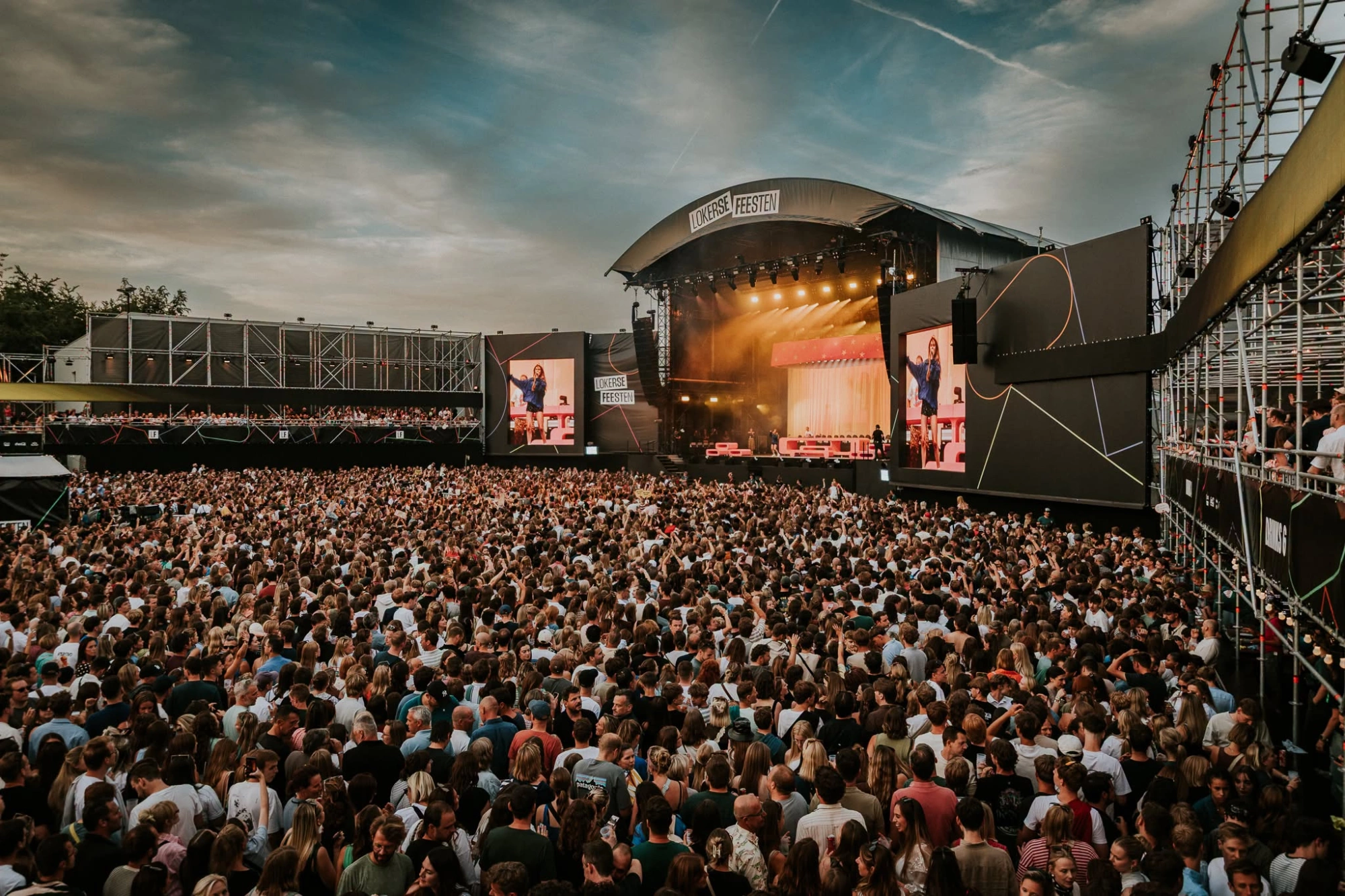
The event: ten days, 135,000 visitors. A cold beer and a sausage are part of the experience.
The challenge: one platform that talks to ticketing and to the festival's own crew platform, and keeps working if the network or power goes out.
The setup: everything on site runs closed loop. In Comfort and Comfort Dine, waiters took orders at the table, and preparation was routed per service point: bar, food or cocktails. At the edge of the site, terminals took open-loop payments.
The result: more visitors topped up online, bar service was faster and the support desk got noticeably fewer questions. Read the full Lokerse Feesten story.
Also with Beyond Ordering: Couleur Café, Sinksen Kortrijk, Bollekesfeest and Brugge Plus.
Frequently asked questions
What does an alcohol licence for an event cost?
That differs by town. In Ghent the spirits authorisation for an event costs nothing. In Brussels, the licence of a bar or restaurant comes with a municipal tax.
Can you sell alcohol without a licence?
Beer and wine at an occasional event run by an association: yes, if you notify the town. Spirits, cocktails and alcopops: not without an authorisation.
Does the licence have to be on site?
In Schelle it does: the licence must be at the location, and the police can check. Give a copy to the bar lead.
Does a party in a hall need an alcohol licence too?
The same rules apply: beer and wine usually not, spirits yes. More on parties in organising a party.
Apply for your authorisation with your event permit
Look up your town's regulations, note the deadline and apply for the spirits authorisation in one go, for all your bars.
Want to see how to set up a price list per bar? We'll show you in a 30-minute demo. Rather ask a question first? Get in touch.
Every bar its own price list
In 30 minutes we'll show you how to set up a price list per bar, with or without spirits.
Read more stories from our blog
Opening a summer bar: what do you sort out first?
Opening a summer bar starts in winter: first the site, then the KBO, FAVV, a drinks licence and a till that takes both cash and card.

Single-use cup ban in Belgium: which cups are still allowed in 2026?
The single-use cup ban in Belgium: what's still allowed at events, in your café and for takeaway? Flemish, federal and EU rules side by side.

Several bars in one venue: how do you track stock and sales per bar?
Running several bars in one venue? Track stock and sales per bar: each bar its own sales point, log transfers and count at closing against the report.