A winter bar that pays: how do you handle staff, queues and checkout?
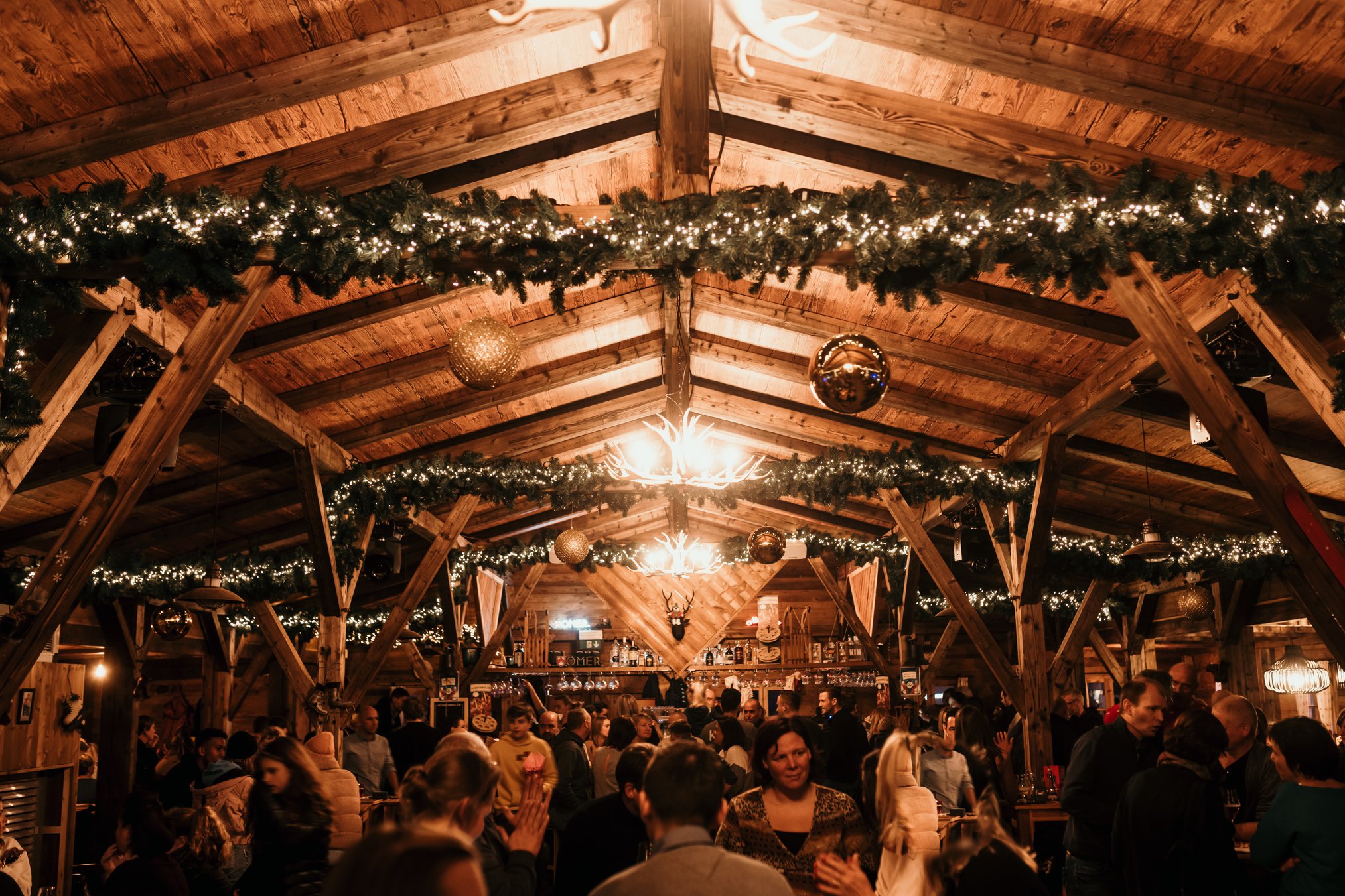
A winter bar pays when every hour of its short season sells.
Guests order and pay at the table by QR code or on a waiter's mobile terminal. Each zone (bar, ice rink, food truck) has its own sales point and report, and the till stays online on 4G when the wifi drops.
Our advice: take work off your team's hands. Let guests order and pay themselves, and keep your people for serving.
- Guests order and pay at the table by QR, or with a waiter on a mobile terminal.
- Each zone gets its own sales point, price list and report.
- Terminals with 4G keep working when the wifi drops.
- Cash and at least one electronic payment method must work at every till.
- A certified till (witte kassa) is only required above €25,000 of restaurant turnover a year.
Why does a winter bar lose money at the peak?
A winter bar loses money when guests wait: a group that waits too long for a waiter often skips the second round.
Staff is the other squeeze: students are sitting their January exams, flexi-jobbers are scarce, and your regular team already works long shifts.
In 30 minutes we'll show you how QR ordering, mobile terminals and a report per zone work together in your winter bar.
Which four choices make a winter bar pay?
Make these four decisions before you order hardware.
| Choice | Options | When it fits |
|---|---|---|
| How guests order | QR at the table, waiter with terminal, or bar | QR for groups, the bar for a quick drink |
| How guests pay | Bank card or phone, your cash card, cash | Card for most, cash card for groups and crew |
| How you split the site | One till, or one sales point per zone | Per zone with a rink, food truck or second bar |
| How the till stays online | Wifi, 4G in the terminal, or both | 4G without reliable wifi, both on large sites |
You can mix all of these on one platform, as in our till system for your pop-up bar. Not sure about the payment route? Read cashless next to cash.
How does a busy winter evening run?
On a busy evening the work moves from taking orders to serving them.
- At the table: each table has its own QR code, so every order is paid before it's made.
- With the waiter: guests who want a person order from the waiter and pay at the table by card or cash.
- To the right station: drinks go to the bar, food to the kitchen or food truck, each with its own ticket.
- Promotion: set a mulled wine and waffle combination for 17:00, or a group deal for the second round.
- Report: at closing you see revenue per sales point, with no spreadsheet the next morning.
Which hardware works in the cold?
Choose terminals that guests can tap and waiters can carry all evening.
Contactless payments save fumbling with gloves.
Our mobile till terminals run on 4G or wifi and last up to 14 hours on a battery. One charging case holds up to 20 of them.
- Charging: in the charging case between rushes, indoors overnight.
- Rain and sleet: for an outdoor bar, choose contactless-only terminals, with no card slot.
- Damage: under our rental terms, frost and weather damage to rented hardware is the organiser's risk from delivery to return, and you insure it for that period.
How do you check out fast at a Christmas market stall, with or without wifi?
A Christmas market stall needs mobile terminals with 4G, a short menu with one button per product, and a cash route.
- Menu: keep it small, set prices in round euros, and put your bestsellers on the first screen.
- Number of terminals: one per person serving at the peak, plus a spare for weekends.
- Connection: each terminal has its own 4G SIM. If 4G drops too, payments are stored on the device and processed when the connection comes back, as our page for pop-ups and catering explains.
- Several stalls: set each one up as its own sales point, with its own revenue and stock.
Do you still have to take cash at a winter bar?
Yes. In Belgium, every purchase in person must be payable in cash and with at least one electronic means, with no surcharge on either (FOD Economie guidelines, 2026).
Your own cash card can sit next to that. Imposing it is only allowed during an event, and the FOD doesn't say whether a weeks-long bar counts as one.
Which GKS and VAT rules apply to a seasonal bar?
A winter bar needs a registered cash register system (GKS) above €25,000 a year in restaurant and catering turnover, excluding VAT (GKS guidelines).
Drinks and takeaway food don't count.
- The threshold is a yearly amount: a short season doesn't lower it.
- Each stand counts on its own: a temporary stand at a market or festival is an establishment in itself, assessed separately.
- Food trucks at a performing-arts event can fall outside: when visitors pay the truck directly with no indoor eating area, the tax office accepts, on a trial basis, a supply of goods. Food-truck festivals are left out of that tolerance.
GKS 2.0 is mandatory for new businesses since 1 July 2026. An existing till must switch by 1 July 2027, 1 July 2028 or 1 January 2029, depending on when you bought it, according to FOD Financiën.
Beyond Ordering is GKS 2.0 certified.
Which VAT rate applies at a winter bar?
With tables or standing tables plus heaters, glasses or table service, the usual split applies: drinks served at 21%, food served as a restaurant service at 12%, takeaway food at 6%.
Outdoors, a standing table alone keeps the sale a supply of goods: 6% for food and soft drinks, 21% for alcohol. One more service element, such as table service, seating, glasses or heaters, makes it a restaurant service. More in our VAT guide for events.
Beyond Ordering delivers fast, professional service, high-quality tools, and an incredibly smooth ordering platform. With direct WhatsApp support, you always have backup when you need it. The value for money is excellent, which is why we would highly recommend it to any winter bar.

In practice: KapAlpen
The event: KapAlpen is a winter bar with an après-ski hut feel, with an ice rink and several external food trucks next to it.
The challenge: too few good staff, a heavy peak, and no clear view of what each zone earned.
The setup: QR ordering at the table, plus waiters and bar staff on the same mobile all-in-one terminals.
- Payments: guests who order by QR pay on their phone. Staff take card or cash on the terminals.
- Zones: the ice rink and each food truck as a separate sales point, with its own price list and printer settings.
- Support: a direct WhatsApp line to our team.
The result: a higher average order value and shorter queues. Revenue per zone is split in the back office, without manual sums or spreadsheets.
Read how the whole season ran in KapAlpen's customer story.
Also running on Beyond Ordering: Zomerbar Bloom, Lokerse Feesten and Couleur Café.
Checklist for opening night
- Draw your site and mark every zone that sells: bar, terrace, ice rink, food truck.
- Give each zone its own sales point, price list and printer.
- Put a QR code on every table and test an order from your own phone.
- Charge every terminal, and keep spares and the charging case indoors.
- Check 4G coverage where the terminals will stand, at the hour you expect the crowd.
- Fix your price list, sales points and number of terminals early: the advance must be paid at the latest 7 days before delivery (general terms and conditions).
Frequently asked questions
Does a winter bar need a witte kassa?
Only above €25,000 a year in restaurant and catering turnover, excluding VAT, under the official GKS rules. Drinks and takeaway don't count.
Can guests still pay cash at a winter bar?
Yes, and they must be able to: every purchase in person must be payable in cash and with at least one electronic means.
Can a Christmas market stall take card payments without wifi?
Yes, with a terminal that has its own 4G connection. Test the signal at your pitch at the busiest hour, before the market opens.
Which permits does a winter bar need?
That depends on your town and whether you stand on public ground: ask early. Check that every permit is in the name of whoever runs the bar this season.
Plan your winter season with us
In a 30-minute demo we go through your zones and give you concrete advice for your site. Rather ask a question first? Get in touch.
A winter bar that pays
In 30 minutes we go through your zones, terminals and price lists, and give you concrete advice for your winter bar.
Read more stories from our blog
Ordering via QR code in your bar or restaurant: how it works
Guests scan, order and pay upfront on their phone, and the order goes to the bar or kitchen. How it works, with the GKS rule and a summer bar.

Hospitality VAT in Belgium: which rate for your café or restaurant?
Hospitality VAT in Belgium: 12% on served food, 21% on every drink you serve, 6% on food and soft drinks to take away. With a worked bill.
How to organise a fuif: the bar, the till and no more drink tickets
Organise a fuif in five steps: registration, Unisono, the bar, reusable cups and a till with one queue instead of paper drink tickets.