Hospitality VAT in Belgium: which rate for your café or restaurant?

Status on 29 October 2026: these are the rates in force, checked against royal decree no. 20 on VAT rates, as amended by the royal decree of 14 February 2026.
Hospitality VAT in Belgium follows one line: is the food served or only handed over?
Food served at a table, on the terrace or at the bar is 12%. Every drink you serve is 21%, with or without alcohol. Food and soft drinks to take away are 6%.
Many sites still announce a higher rate on takeaway and a lower one on soft drinks in cafés. Neither is in force: both are off for now, VRT NWS reported on 13 February 2026.
Our advice: put the rate on the product, and make the takeaway version a separate product. Then the guest's answer picks the right rate.
- Food served at a table, on the terrace or at the bar: 12%.
- Every drink you serve: 21%, with or without alcohol.
- Food and soft drinks to take away: 6%. Wine and beer to take away stay at 21%.
- For food and drinks in a café or restaurant, nothing changed in 2026.
- Only served food counts toward the registered till threshold.
Which VAT rate applies to which hospitality product?
Find what you sell on the left. The rate on the right is the one your till should carry.
| What you sell | VAT rate |
|---|---|
| Breakfast, lunch or dinner served at a table or on the terrace | 12% (food only) |
| Coffee, tea, water and soft drinks served to drink on site | 21% |
| Beer, wine, spirits and cocktails, also with a meal | 21% |
| Lunch formula with a drink included at one price | split: food 12%, drink 21% |
| Sandwich, soup or dish handed over to take away | 6% |
| Coffee or soft drink to go, no seat used | 6% |
| Bottle of wine sold to take home | 21% |
| Meals delivered to the customer's home, without service | 6% |
| Catering at a client's venue, with staff who serve | food 12%, drinks 21% |
| Room with breakfast in a hotel-restaurant | 12% since 1 March 2026 |
Alcohol is the fixed point. Wine, beer and spirits keep the standard rate with a dinner and in a bag to take home.
Soft drinks and coffee only move when nothing is served around them. The cappuccino on the terrace and the one in a paper cup at the window are two different sales.
In 30 minutes we show you how your price list carries VAT per product and how your report splits takings per rate.
When is food served, and when is it handed over?
Food is a restaurant service when you add enough support for the guest to eat it on the spot. Without that support, you only supply the food.
The rule comes from EU Implementing Regulation 282/2011, article 6. The FOD's own guidelines for the registered cash register name the signs of a service.
Indoors, guests using your tables, standing tables or an eating counter is enough on its own. On a terrace you need at least one of these:
- Service: at the table, or staff who clear the table instead of the guest.
- Plates, cutlery or glasses: reusable or disposable, for eating on site.
- Seating: so guests can eat sitting down.
- Comfort: another feature that makes eating there more comfortable, such as heating, shade or music.
Three cases in a café
- The guest sits down and orders. Food at the middle rate, every drink at the standard rate.
- The guest takes a sandwich and leaves. A supply of food at the reduced rate.
- The guest takes it away but eats at your terrace tables. Your seating makes it a service, so the middle rate.
How much VAT is in one table's bill?
Your menu prices include VAT, so you work back from them. The VAT inside a price is the price times the rate, divided by 100 plus the rate.
Two guests have lunch on the terrace: two dishes of the day, two glasses of wine and two coffees.
| On the bill | Price incl. VAT | Rate | VAT inside |
|---|---|---|---|
| 2 dishes of the day at €18.00 | €36.00 | 12% | €3.86 |
| 2 glasses of wine at €5.50 | €11.00 | 21% | €1.91 |
| 2 coffees at €3.00 | €6.00 | 21% | €1.04 |
| Total | €53.00 | €6.81 |
The same two dishes in a box, to take away, change the food line:
| Same food, other setting | Price incl. VAT | Rate | VAT inside |
|---|---|---|---|
| 2 dishes eaten on the terrace | €36.00 | 12% | €3.86 |
| 2 dishes in a box to take away | €36.00 | 6% | €2.04 |
Put the drinks on the food rate by mistake and this one table already declares more than a euro too little. Over a year of lunches, that's what an audit adds up.
What did 2026 change for cafés and restaurants?
For food and drinks in a café or restaurant, nothing changed in 2026.
The one change for hospitality is the hotel room. Furnished lodging, with or without breakfast, moved from the reduced to the middle rate on 1 March 2026.
The budget agreement announced a higher rate on takeaway meals and a lower one on soft drinks served in cafés. The royal decree of 14 February 2026 kept neither: its rate changes only cover pesticides, furnished lodging and camping.
No decree for 2027 had been published on 29 October 2026. According to the same VRT NWS report, the government still aims to raise the revenue the shelved measures were meant to bring, so they may come back. When a decree is published, we update this page and the status line.
Why is your VAT split also your GKS meter?
You need a registered cash register when your restaurant and catering services pass €25,000 a year, excluding VAT and drinks, per the GKS guidelines of FOD Financiën.
That's the food on your middle-rate line, and only that. Drinks with a meal, drinks outside a meal and takeaway meals stay out.
- A café with €180,000 of drinks and €22,000 of served snacks (excl. VAT) stays under the threshold.
- The same café with €30,000 of served snacks must use a registered till.
- A sandwich bar that sells almost everything to take away counts only what guests eat on site.
That's why a wrong rate costs twice. Book served food at the takeaway rate and your report hides turnover that counts toward the threshold.
Beyond Ordering is GKS 2.0 certified. The till that splits your rates is also the registered till when you need one. Who needs one, and by when, is in our explainer on the registered cash register (witte kassa).
How do you set VAT per product in your till?
In Beyond Ordering you set each product's price including VAT, and its rate, once in the price list. Every sale then lands in the cloud report under the right rate, live.
For a café, that means three settings:
- Food and drinks as separate products: the kitchen on the middle rate, the bar on the standard rate, even on one ticket.
- Eat in and takeaway as separate products: put the takeaway version of a dish on the menu as its own product at the reduced rate, next to the served version at the middle rate.
- One closing report per rate: the day comes out split, ready for your bookkeeper.
Ring up a lunch formula as two products, the dish at the middle rate and the drink at the standard rate, with prices that add up to the formula price. Write that split down once, so every till and every shift uses the same numbers.
For a busy weekend or a party you add extra mobile terminals, with temporary price lists if needed, without being tied to a heavy permanent investment.
QR orders use the same menu, and so the same rates, as the till. Our post on ordering and paying in your café or bar shows the QR flow itself. Caterers find their setup under pop-ups and catering.
Our guests order online by scanning the QR codes on the tables. Orders are automatically split between our bar and kitchen, allowing us to serve our guests much faster and more efficiently.

In practice: Zomerbar Bloom
The event: a summer bar with a busy terrace, a bar and a kitchen.
The setup: guests scan a location-aware QR code on their table, then order and pay on their phone. Each order splits automatically, so the bar and the kitchen only get the items they prepare.
Guests who want a waiter still get one. Staff enter those orders on an all-in-one terminal, and cash and card join the QR orders in one back office.
The result: more than 95% of orders run through the QR flow, with more than 25% fewer staff on the terrace and every order correct and paid (Zomerbar Bloom customer story).
Kitchen items and bar items are apart before anyone looks at a rate, and the same split works for VAT. Drinks from the bar and dishes from the kitchen each carry their own rate, and the report splits the VAT live.
Checklist for your price list
- Split every menu item into food or drink.
- Set served food at 12% and every drink served on site at 21%.
- Add separate takeaway products at 6% for food and soft drinks to go.
- Keep wine and beer to take home at 21%.
- Give lunch formulas a written split between food and drink.
- Check your served-food turnover against the GKS threshold.
- After the first week, compare the report per rate with what you expected.
Frequently asked questions
What is the VAT rate for hospitality in Belgium?
There's no single rate. Served food is 12%, every drink served is 21%, and takeaway food or soft drinks are 6% (KB nr. 20, the Belgian rate decree).
Which rates apply at an event instead of a café?
The same three, but food trucks, shared picnic tables, tickets and drink tokens bring their own questions. Our guide on VAT on drinks and food at events covers them.
Is there VAT on hotel stays?
Yes. Since 1 March 2026 a furnished room, with or without breakfast, carries the middle rate, like served food. Meals outside the room price follow the café rules above.
Does a café that only serves drinks need a registered till?
Not because of the drinks. Only restaurant and catering services count toward the threshold, and drinks are left out.
Check your price list before the next service
Go through your menu once: food or drink, eat in or take away. Then let the till hold the rate on every product, so the report does the split.
Want to see that on your own menu? We show you how in a 30-minute demo. Rather ask a question first? Get in touch.
The right rate on every product
In 30 minutes we show you how your price list carries VAT per product and your report splits it per rate.
Read more stories from our blog
Ordering via QR code in your bar or restaurant: how it works
Guests scan, order and pay upfront on their phone, and the order goes to the bar or kitchen. How it works, with the GKS rule and a summer bar.

How to organise a fuif: the bar, the till and no more drink tickets
Organise a fuif in five steps: registration, Unisono, the bar, reusable cups and a till with one queue instead of paper drink tickets.
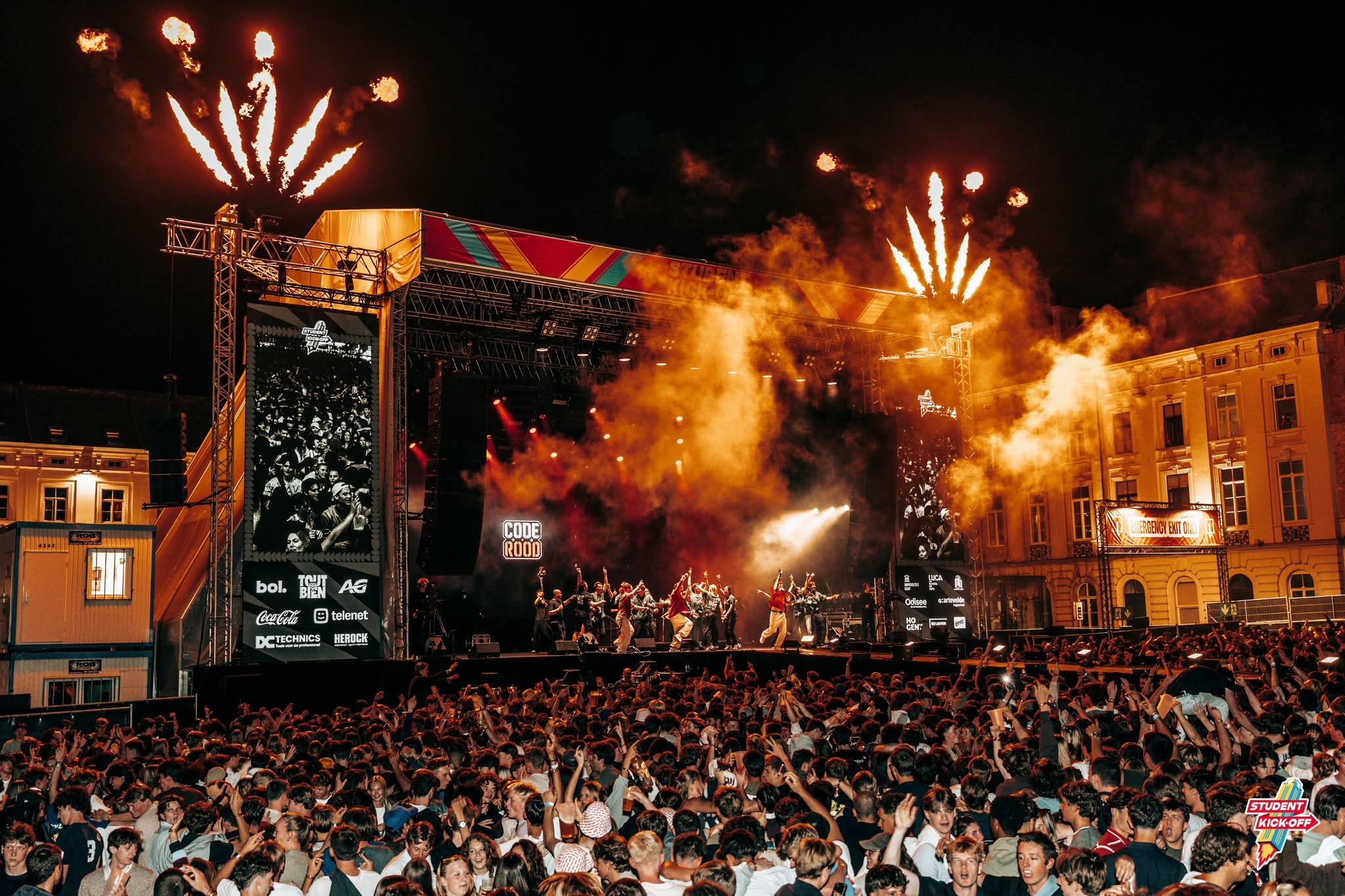
Cashless festival: how it works from top-up to refund
How a cashless festival runs on the day: top-up points, the bar, crew credit, cups, closing time and refunds, seen from the organiser and the crew.