Registered cash register (witte kassa): who needs one, and by when
Status on 12 November 2026: GKS 2.0 is mandatory for hospitality businesses since 1 July 2026. Existing users switch by the purchase date of their till, from 1 July 2027 (FOD Financiën, GKS news of 3 June 2026, checked on 12 November 2026).
A registered cash register (witte kassa, or GKS) is a certified till with a fiscal data module that records every sale for the tax authority.
You need one when an establishment earns more than €25,000 a year, excluding VAT, from restaurant and catering services. Drinks and takeaway don't count (GKS guidelines).
Our advice: add up your served-food turnover per establishment and look up your deadline in the GKS e-service, ideally a season before you have to switch.
- The threshold is €25,000 a year excluding VAT from restaurant and catering services, per establishment.
- Drinks and takeaway don't count toward that threshold.
- New businesses that need a GKS choose GKS 2.0 straight away since 1 July 2026.
- Existing tills switch between 1 July 2027 and 1 January 2029, by purchase date.
- A temporary food stand at an event is its own establishment, with its own threshold.
Who needs a registered cash register?
Every establishment, and every caterer, whose restaurant and catering turnover passes the yearly threshold of €25,000.
Below that, a numbered VAT bill (rekening or ontvangstbewijs) for each meal is enough (GKS exemptions).
Four rules decide whether you cross the line:
- Per establishment: each venue under your VAT number is judged on its own turnover. Spaces where guests walk from one to the other without leaving the building count as one.
- Calendar year: the amount is annual. You check the running total each time you file a periodic VAT return.
- Starters estimate: a new business works from a realistic business plan. If it expects to pass the threshold, it registers by the end of the second month after it starts and uses a GKS by the end of the third month.
- After crossing it: register by the end of the second month after the VAT period in which you passed the amount. Have the GKS running by the end of the third month.
Which activities are exempt?
Think of food and drink on a hotel's overall room bill, a staff-only company canteen, or a VAT-exempt school cafeteria.
A business that hands all its catering to a subcontractor who issues GKS tickets is exempt too.
In 30 minutes we show you our certified GKS 2.0 till, with QR ordering and both FDM routes.
What counts toward the €25,000?
Only restaurant and catering services count: food served to eat on the spot, or catering where your staff serve at the client's place.
| Counts toward the threshold | Doesn't count |
|---|---|
| Meals eaten on site (restaurant service) | Drinks, with or without a meal |
| Catering where your staff prepare, serve or clear at the client's place | Takeaway meals and plain supply of food |
| Food at a stand with seating or extra comfort (see the event section) | Separately priced rental of tables or staff |
| Other activities, such as wellness or bowling |
The line between a service and a plain supply also sets your VAT rate. In a service you charge 12% on food and 21% on drinks; a plain supply of food is 6%.
Our guide to VAT on food and drinks at Belgian events explains the split. For your café or restaurant, read hospitality VAT in Belgium.
What does GKS 2.0 change?
GKS 2.0 brings a renewed fiscal data module that sends ticket details online to the cloud server of FOD Financiën (GKS 2.0 technical information).
For you as an owner, three things change:
- Your till and your fiscal data module (FDM, the "black box") must both be certified for GKS 2.0 by the producer or distributor.
- Guests can get a digital VAT receipt instead of a paper one.
- Data reaches the tax authority almost in real time, so FOD Financiën expects fewer checks on site.
The tolerance periods are over. The last one ran until 30 June 2026.
What certification covers and how to check it is in our post on GKS 2.0.
When must your existing till switch to GKS 2.0?
Existing users switch by the purchase date of their current till, between 1 July 2027 and 1 January 2029.
| Your current till was bought | GKS 2.0 installed by |
|---|---|
| Before 1 January 2018 | 1 July 2027 at the latest |
| 1 January 2018 to 31 December 2021 | 1 July 2028 at the latest |
| From 1 January 2022 | 1 January 2029 at the latest |
| New business from 1 July 2026 | GKS 2.0 straight away (no GKS 1.0) |
With several tills, the most recent purchase date sets your deadline. The purchase date of the FDM doesn't count.
What applies to event bars, pop-ups and caterers?
A temporary food stand at a festival, market or fair is an establishment like any other, with its own threshold.
Whether food at your stand counts depends on the comfort you offer:
- Indoors: it's a restaurant service as soon as guests use the seats or counters you provide.
- In the open air: standing tables or a fold-out counter aren't enough on their own. Add one more comfort element, such as seats, ground cover, heating, a roof against sun or rain, or background music, and it becomes a restaurant service.
- Food trucks at performing-arts events: food trucks and mobile food stalls at a concert or music festival are treated as a trial as a plain supply of goods when no indoor eating space is provided: 6% on food and soft drinks, 21% on alcohol. If the truck or a third party, such as the organiser, provides an indoor space with tables or a counter, it's a restaurant service. The trial rule doesn't cover food truck festivals, or the organiser's own bars.
- Hired for a private event: a truck or stand hired by a client, who is invoiced, delivers a catering service.
An association's one-off event can fall outside the GKS when its proceeds are VAT-exempt. Its taxable cafeteria still counts, so check the case with your accountant.
Our page on cashless for pop-ups and catering shows how a pop-up or catering bar runs on one system, from QR order to GKS 2.0 receipt.
How does a registered till work on the day?
Every sale runs through the certified till. It signs the sale through the FDM and gives the guest a VAT receipt.
With Beyond Ordering, orders at the bar, at the table and by QR code go through one flow, the same one our ordering and payment set-up for bars and clubs uses. You pick one of two FDM routes:
- In the cloud: with the Checkbox FDM integration, each order is signed digitally in the background, so extra mobile tills or QR order points need no extra box.
- On site: a certified physical module, the black box, plugs into the till hardware. Our geregistreerd kassasysteem with a black box validates each receipt locally, without a cloud connection for the fiscal encryption.
Pick the cloud route if you often add mobile tills or QR points. Pick the black box if you want fiscal signing at the bar itself.
The switch starts with a kick-off and onboarding with your payment partner. Then we set up the platform and configure the hardware (how our service works). Plan time for the payment partner's identity checks (KYC), which you're responsible for.
By seamlessly combining online QR orders with waiter orders through Beyond Ordering's all-in-one terminal, we're able to serve all our guests in no time.
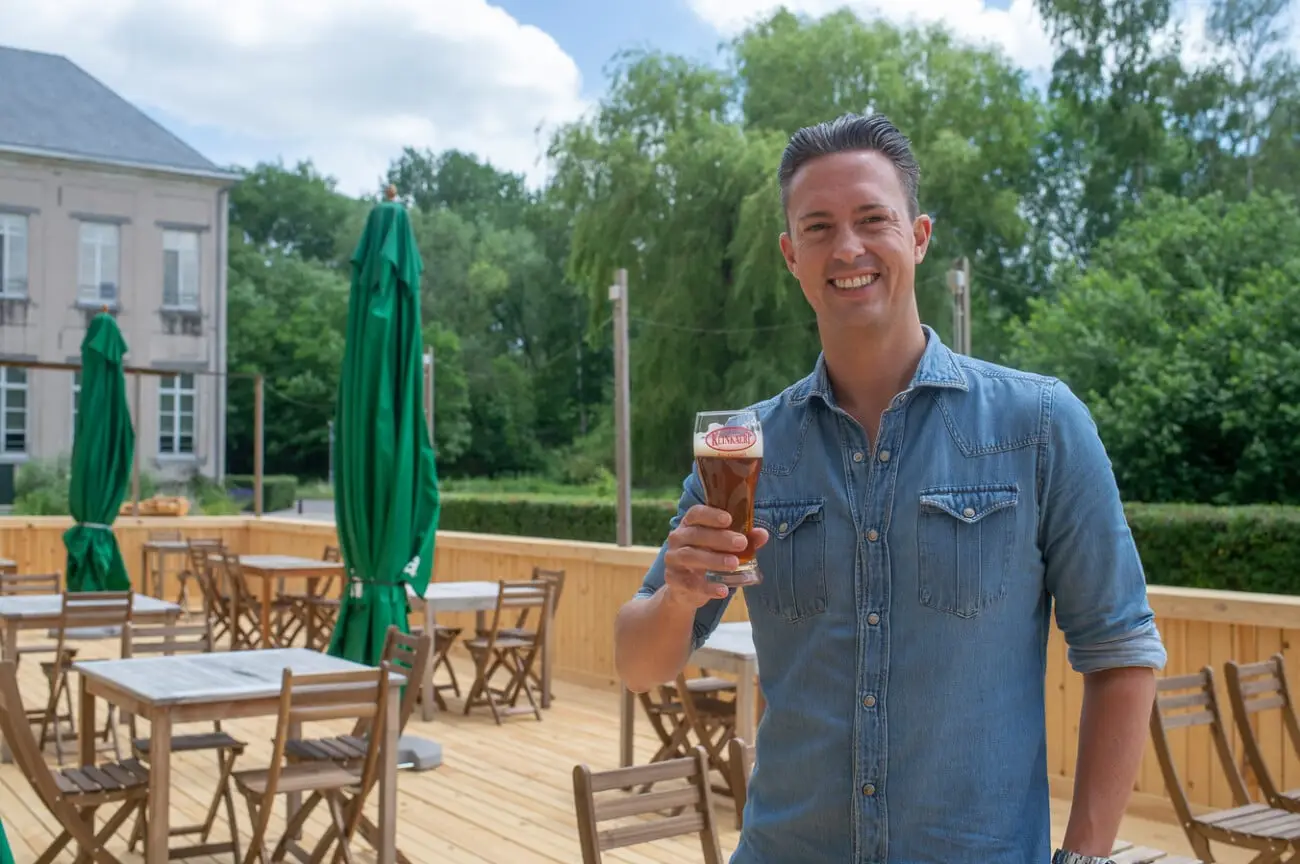
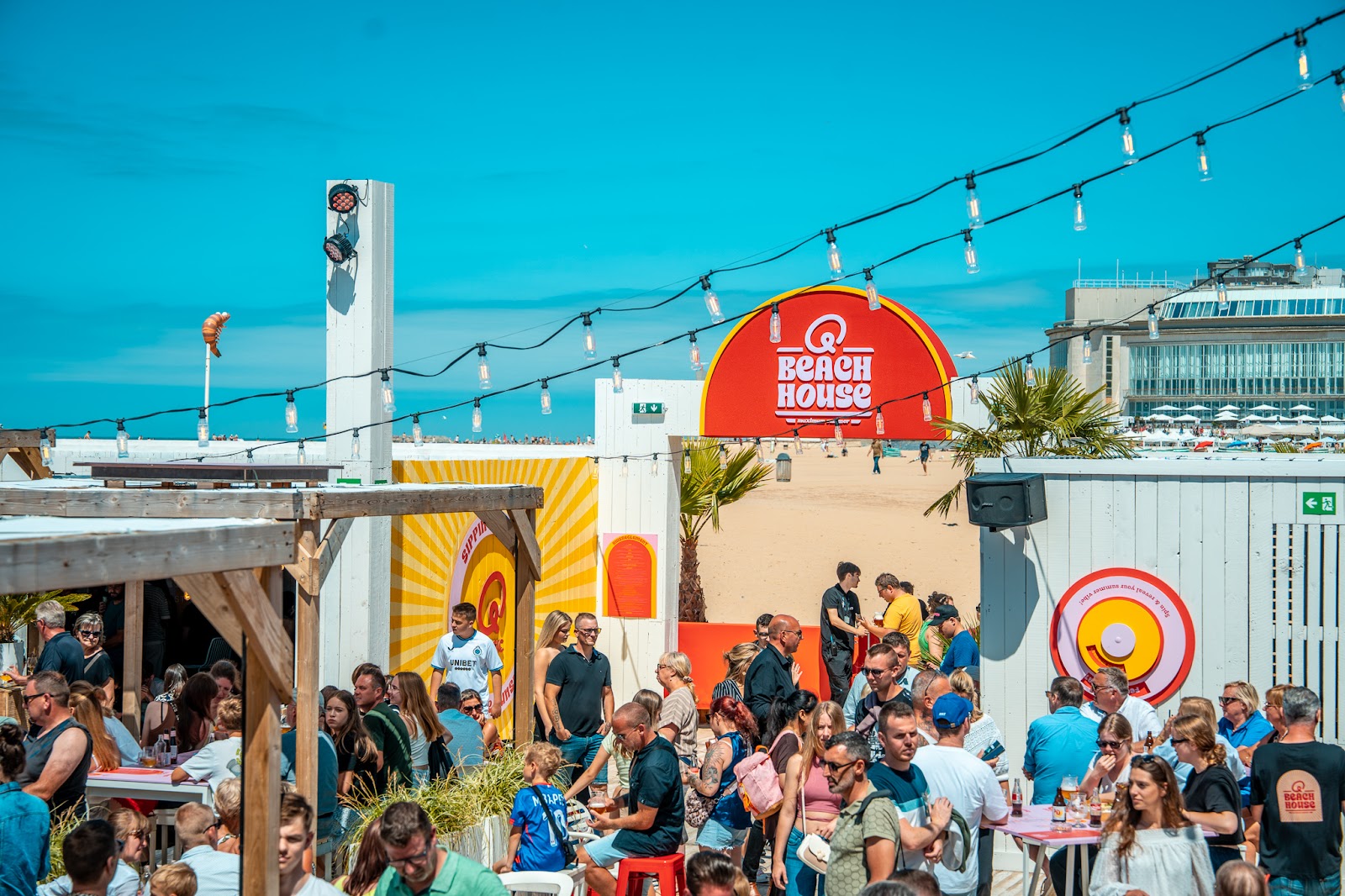
In practice: Q-Beach House and Bar Bernaar
The event: GKS 2.0 pilots at Q-Beach House and Bar Bernaar, after which FOD Financiën certified Beyond Ordering as a GKS 2.0 registered cash register on 19 December 2025.
The setup: guests ordered online with a QR code while staff kept taking orders at the table.
The result: faster table turnover and happier guests, even at peak times (our certification post).
Checklist: get ready for GKS 2.0
Work through these six steps before your deadline, ideally a season ahead.
- Add up last year's restaurant and catering turnover per establishment, without drinks and takeaway.
- List every till you own with its purchase date, and mark the most recent one.
- Look up your deadline in the GKS e-service.
- Ask your supplier in writing whether your till and FDM are certified for GKS 2.0.
- For event stands, decide per location whether you offer seating or extra comfort.
- Plan the switch outside your busiest weeks, and train staff on the new receipt flow.
Choosing a new till anyway? Our guide on choosing a hospitality POS system covers that decision.
Frequently asked questions
What does a witte kassa cost?
It depends on how many tills and order points you need, buying or renting the hardware, the FDM route, software and payment fees, and on-site help.
Ask every supplier to price those items separately.
How do I register for the GKS?
You register your establishment in the GKS e-service of FOD Financiën, with your till and FDM details.
Start early: you can register before your till and FDM arrive, and certified equipment can take time to deliver.
Can a café that only serves drinks stop using its GKS?
Yes, once it stops its restaurant service for good. A restaurant whose meal turnover simply falls doesn't stop automatically.
Is a witte kassa mandatory in 2026?
Yes, once you pass the threshold.
A new business that needs a GKS must choose GKS 2.0, not 1.0; an existing till follows the purchase-date deadlines from 1 July 2027.
Check your deadline, then plan the switch
Your first step is your deadline in the GKS e-service. Your second is a certified till that fits how your bar runs on a busy night.
We show you our GKS 2.0 set-up, with QR ordering and both FDM routes, in a 30-minute demo. Rather ask a question first? Get in touch.
Ready for GKS 2.0?
In 30 minutes we show you our GKS 2.0 till, with QR ordering and both FDM routes.
Read more stories from our blog
Ordering via QR code in your bar or restaurant: how it works
Guests scan, order and pay upfront on their phone, and the order goes to the bar or kitchen. How it works, with the GKS rule and a summer bar.

Hospitality VAT in Belgium: which rate for your café or restaurant?
Hospitality VAT in Belgium: 12% on served food, 21% on every drink you serve, 6% on food and soft drinks to take away. With a worked bill.
How to organise a fuif: the bar, the till and no more drink tickets
Organise a fuif in five steps: registration, Unisono, the bar, reusable cups and a till with one queue instead of paper drink tickets.