Cashless festival: how it works from top-up to refund
At a cashless festival, visitors pay at the bar with a festival card, a wristband or their own bank card.
Money is loaded before or at the gate, every sale and cup is registered on a terminal, crew drink on internal credit, and after closing visitors get their remaining balance back.
Our advice: give every moment of the day its own owner, and put the refund rules on your ticket page before visitors ask.
- A cashless festival day has seven moments, from the evening before to the refund.
- Visitors with cash load credit at a top-up point; visitors paying by card or phone go straight to the bar.
- Crew and partners drink on internal credit: stock stays correct, but it isn't booked as revenue.
- After the event, visitors ask for their remaining balance through the QR code on their card.
- A refund isn't compulsory, but tell visitors before they buy a ticket whether there is one and how it works.
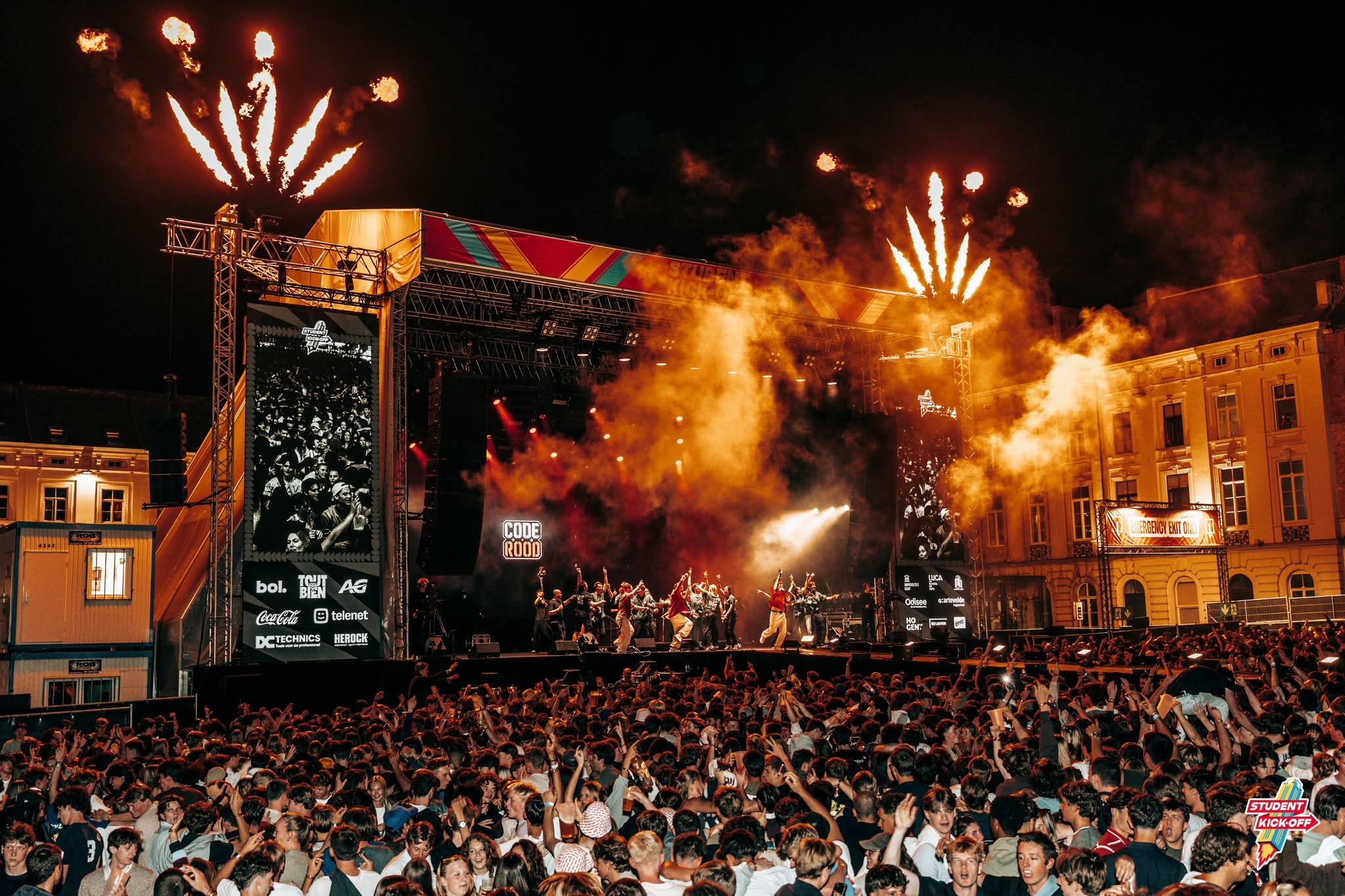
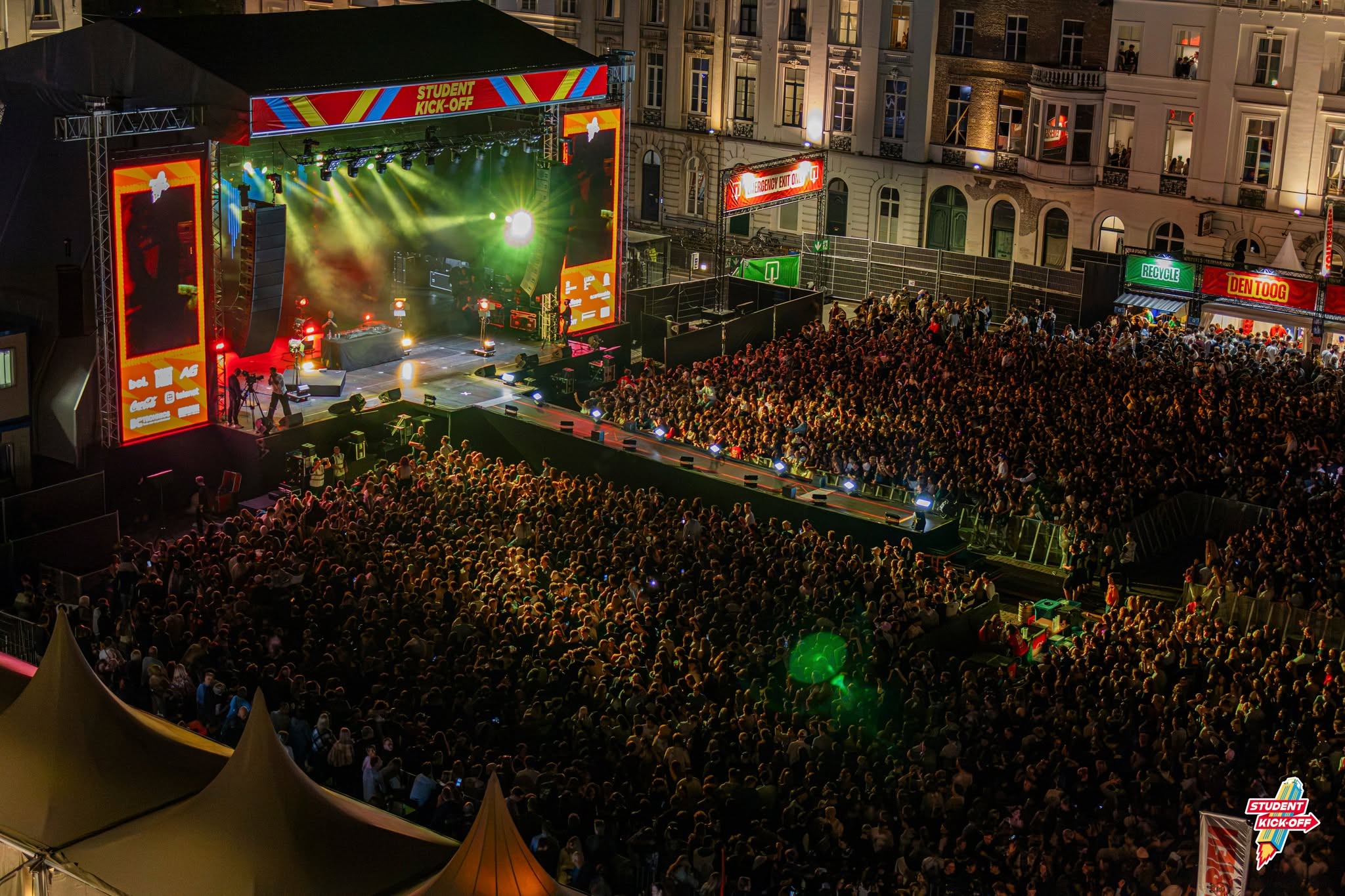
This page follows one festival day from the organiser's side, with examples from Student Kick-off Gent (35,000 students) and other festivals we run.
How does a cashless festival run, moment by moment?
A cashless festival day has seven moments, each with its own owner. Here they are in order.
In 30 minutes we'll show you how top-ups, the bar, crew credit and the refund run in one system.
What happens at each moment?
Step 1: The evening before
The terminals arrive configured, with your menu, prices and bars already set. Your team checks the network on site, charges every device and loads crew and sponsor credit.
Before doors open, run your own check: every terminal charged and online, the network tested, price lists checked, bar crews briefed. The monitoring app shows battery and connection per device.
With our full service, we install the hardware ourselves and brief your bar crew before doors open.
A crew that uses the same interface all year needs almost no training: Muziekclub N9's volunteers work with the same software winter and summer.
Step 2: Doors open and visitors top up
Visitors who pay by bank card or phone go straight to the bar. Visitors with cash load a card or wristband at a top-up point, or top up online before they arrive.
At an event you may impose your own card, if you announce it clearly (FOD Economie guidelines, 2026). Our explainer on open loop, closed loop or hybrid payments shows which setup fits which crowd.
Step 3: At the bar
The bar crew taps the order, the visitor holds out a card, wristband or phone, and the sale is done. A drink and its reusable cup go through in one movement at the till.
Promotions can switch on and off by themselves at set hours, so nobody behind the bar changes prices by hand.
Step 4: Crew, artists and partners
Crew and partners drink on internal credit on the same cards. The stock stays correct, but those drinks aren't booked as revenue.
Credit can be limited to one day or loaded automatically from your crew planning, so volunteers never queue for vouchers. At Lokerse Feesten, crew credit is valid that day only and isn't refundable.
Step 5: During the night
The F&B lead follows sales per bar, per device and per staff member live. When one bar runs low on drinks or cups, you restock before the queue grows.
Our live monitoring for festivals also shows battery and connection per terminal, so a weak device is swapped before it fails.
Step 6: Closing time
At curfew the bars close, the last cups come back and the last deposits are refunded. Each till ends its shift with its own sales report.
At Couleur Café, every seller ends a shift with a report checking vouchers sold, cash and electronic receipts, instead of counting by hand.
Step 7: After the event
In closed loop, visitors ask for their remaining balance through QR Refund: they scan the QR code on their card and enter the bank account (IBAN) it should go to.
Any refund cost for the visitor is yours to set and announce before the ticket sale. Refund fees we charge you, if any, are in your quote.
A refund isn't compulsory, but tell visitors before they buy a ticket whether there is one and how it works. The FOD Economie advises, as best practice, a simple refund at no cost; if you charge a fee, keep it in line with your prices, for example at most one soft drink.
You set the refund window. Lokerse Feesten 2026 opened it from 12 August to 11 September, at no cost to visitors (Lokerse Feesten cashless page). 12 Inch Lovers takes requests up to 7 days after the event and pays within two weeks (12 Inch Lovers cashless info).
All the rules and refund routes are in leftover cashless balances.
Who does what on the day?
Four groups share the day: visitors, bar crew, your F&B team and your cashless partner.
| Moment | Visitor | Bar crew | Your F&B team | Cashless partner |
|---|---|---|---|---|
| Evening before | Can top up online | Gets the briefing | Checks bars, menus, crew credit | Delivers, installs, tests the network |
| Doors open | Pays by card or loads credit | Opens the till | Watches top-up queues | Support on site or remote |
| At the bar | Taps card, wristband or phone | Taps the order, scans the cup | Follows sales per bar | Monitors devices |
| During the night | Tops up again if needed | Swaps a weak terminal | Restocks, moves staff | Second-line support |
| Closing time | Returns the last cup | Closes the shift report | Collects reports | Collects hardware |
| After the event | Asks for the remaining balance | Nothing | Closes the books | Runs refunds, delivers reports |
What does your bar crew need to know?
Your bar crew needs five things before the first drink.
- Selling: tap the products, let the visitor tap, wait for the confirmation.
- Cups: register every cup sold and every cup returned, even in a rush.
- Crew credit: colleagues pay with their crew card like any visitor.
- Help: one contact for a broken terminal, not the bar manager.
- Refunds: send visitors to the QR code on their card or to the info desk.
Cups are their own flow. Our page on reusable cups and deposits covers the deposit options.
Organising a festival for 35,000 students in the centre of Ghent made me hesitant about going cashless. But thanks to Beyond Ordering’s involvement and guidance, the switch went remarkably smoothly. They never push anything, they think along with our organisation, and they’re always available, before, during and after the event. Two years in, we’re still just as happy: a huge asset for our F&B operation and for our visitors.

In practice: Student Kick-off Gent
The event: the largest student festival in Flanders, 35,000 students on the Sint-Pietersplein in one evening. Between 20:00 and 00:30 every bar runs at full speed.
The challenge: the organisers have one chance to make their revenue. A slow payment system wasn't an option.
The setup:
- Hybrid payments: most students paid at the bar with a bank card, Apple Pay or Google Pay. A small group paying cash loaded a personal cashless card at central tills.
- Hardware: 85 mobile terminals and 20 terminals on a stand; most mobile ones were contactless only, with no card slot to get wet in the rain.
- Crew and partners: the same cards carried internal credit, with stock correct and no revenue booked for those drinks.
- Promotions: 2+1, 1+1 and 3+1 deals were programmed in advance and switched on at the right terminals at the right hour.
- Cups: instead of refunding the deposit on the last cup, students got a promo voucher for partner cafés in the city.
- Full service: we delivered and installed the hardware, briefed the staff, gave on-site support and live monitoring, then collected everything and helped with the reports.
The result: students paid fast, also at the peak. The organisers got a deposit report settled to the cent, and ran the promotions and the cup swap at no extra cost.
Read the full Student Kick-off Gent story.
Also running on Beyond Ordering: Lokerse Feesten, Couleur Café, 12 Inch Lovers and Muziekclub N9.
Where does the day go wrong, and how do you prevent it?
Plan for these four things so the day doesn't go wrong.
- The network: plan wifi and 4G for the bars, not only for the stage, and pick terminals that can sell offline.
- Cash visitors: give them a clear top-up point near the entrance, with signs in euro.
- Refund information: put the refund rules on the ticket page and on the site, before visitors ask.
- Cups: decide in advance what happens with the last cup: refund, swap or donation.
Still choosing a supplier? Use the six criteria for choosing a festival cashless payment system.
Frequently asked questions
What is a cashless payment system at a festival?
It's the set of cards or wristbands, terminals and software that lets visitors pay without coins or paper tokens.
Visitors pay with festival credit, their own bank card, or both.
What happens at a cashless festival if the internet goes down?
With closed loop, the balance sits on the card, so the bar can keep selling offline.
Bank card payments usually need the payment network to be approved, so ask what the terminals do when it's gone; that's why the site network matters.
Can visitors still pay cash at a cashless festival?
Yes. If you sell your festival card or credit on site, visitors must be able to buy it with cash as well as electronically, so you need a top-up point that takes cash.
Can crew get drinks without paper vouchers?
Yes. You load internal credit on their cards or wristbands, per day or per role.
You see what crew consume separately from public sales.
Plan your festival day with us
Walk through your own festival day with us, from the evening before to the refund. First see how we run cashless payments at festivals.
In a 30-minute demo we'll show you top-ups, the bar, crew credit and the refund in one system. Rather ask a question first? Get in touch.
Your festival day, from top-up to refund
In 30 minutes we'll walk through your own festival day, from the evening before to the refund, with top-ups, the bar and crew credit in one system.
Read more stories from our blog
Ordering via QR code in your bar or restaurant: how it works
Guests scan, order and pay upfront on their phone, and the order goes to the bar or kitchen. How it works, with the GKS rule and a summer bar.

Hospitality VAT in Belgium: which rate for your café or restaurant?
Hospitality VAT in Belgium: 12% on served food, 21% on every drink you serve, 6% on food and soft drinks to take away. With a worked bill.
How to organise a fuif: the bar, the till and no more drink tickets
Organise a fuif in five steps: registration, Unisono, the bar, reusable cups and a till with one queue instead of paper drink tickets.