Going cashless in your club or concert hall: a step plan

A cashless club works best as a hybrid. Guests pay by card or phone at every bar, cash still works on regular nights, and one top-up point turns cash into credit on a club card.
Plan the switch between two seasons, in eight steps: from mapping today's cash flows to a test night with your own crew.
Our advice: don't drop cash, give it a fast lane. On regular club nights your bars keep taking cash, registered on the same terminal as card payments.
- Hybrid suits most clubs: card and phone at the bar, a club card for cash payers.
- For a purchase on the spot, guests must be able to pay with cash and with at least one electronic method, without a surcharge.
- The own-card exception applies to the organiser during an event, not to your regular nights.
- You only need a registered cash register above €25,000 a year, excluding VAT, in restaurant and catering services.
- Eight steps: four decisions, then setup and testing, with a test night before the first busy one.
What changes at the bar of a cashless club?
Fewer hands touch money, and the closing count comes from the system.
What stays is the guest's choice to pay cash: you give it a fast lane instead of dropping it.
| Cash bar | Hybrid | Own card only | |
|---|---|---|---|
| How guests pay at the bar | Cash, sometimes a card reader | Card, phone or club card | Club card |
| Where cash goes | Into every till | Registered on the bar terminal, plus one top-up point or kiosk | One top-up point or kiosk |
| Speed at the bar | Slowest: change and counting | Fast | Fast |
| Count after closing | Per till, by hand | From the report | From the report |
| Unspent balance | None | Only on club cards | On every card |
| Fit for weekly club nights | Yes | Yes | Not advised: FOD's exception is for events |
The three models have names: open loop, closed loop and hybrid. Our explainer on open loop, closed loop or hybrid payments sets them side by side.
In 30 minutes we'll show you how card, phone, cash and a club card land in one report.
Which rules apply to a venue?
For a purchase on the spot, guests must be able to pay with cash and with at least one electronic method, without a surcharge. That's the starting point for any club or concert hall.
The FOD Economie guidelines on own payment means at events (17 July 2026) allow one exception: during an event, the organiser may impose a card or tokens of its own.
That holds only when guests are told clearly in advance, prices stay shown in euro, and the system isn't an unfair practice. If you sell the card on site, guests must be able to buy it with cash and electronically.
Refusing cash at the till isn't an option, FOD Economie writes, except in exceptional and temporary cases. A cashless club keeps cash on regular nights: the bar terminal registers it like any other payment.
Does your venue need a registered cash register?
Only above €25,000 a year, excluding VAT, in restaurant and catering services per establishment, according to the GKS guidelines.
Drinks and entrance fees to a dancing don't count; meals served on site do.
How do you go from cash to cashless in eight steps?
Eight steps take a venue from cash to cashless, spread over the quiet weeks before a new season. The first four are decisions; the last four are setup and testing.
The payment partner's onboarding (a check on your organisation) has to be done before the terminals can be configured, and you want a test night before the first busy one.
Step 1: Map where money changes hands today
List every point where a guest pays: each bar, the cloakroom, the entrance, merch, food. Add the places where money moves without a sale, such as crew drinks and artist riders.
Step 2: Choose the model
Hybrid suits most clubs: card and phone at the bar, a club card for cash payers.
Card only suits a one-off event with its own audience, never your regular nights. Pure cash keeps the queue.
Step 3: Give cash a fast lane
On regular nights your bars keep taking cash, registered on the same terminal as card payments. Add one top-up point where every guest passes, such as near the entrance.
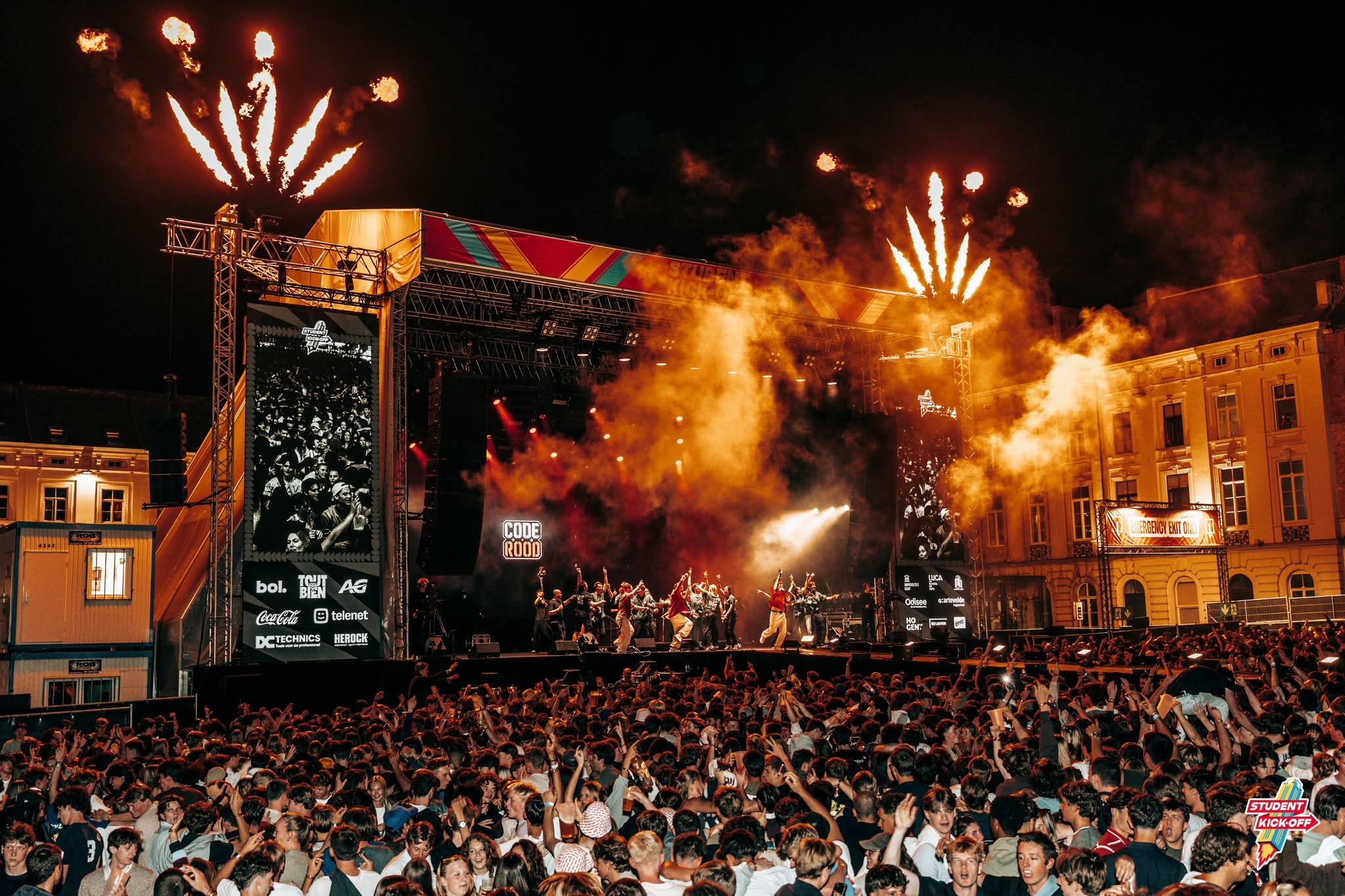
That can be a staffed till, as Student Kick-off Gent did with its central event tills. Or a cash kiosk, where guests top up on their own: it holds up to 300 notes and needs mains power and a network connection.
At an event with your own card, that top-up point can be the only place that takes cash. Our guide to combining cashless with cash goes deeper into cash cards and QR vouchers.
Step 4: Decide what happens to unspent credit
A club card can carry credit from one night to the next, so small balances build up over a season.
Decide whether guests can ask for a refund, or, without one, whether they can spend the balance in full, and tell them before they top up. The rules are in leftover cashless balances.
Step 5: Build the price lists
Make one price list per bar and one per event type: concert, club night, private hire. Prices stay in euro on every list, also when you sell a club card.
Step 6: Fit the hardware to the room
Fixed bars get terminals in a stand on mains power, so no battery runs out mid-set.
Mobile terminals cover the extra bar on a sold-out night, and every payment terminal runs on wifi with a 4G backup.
Step 7: Give crew and artists their own credit
Replace paper drink tickets with internal credit on a card. Crew drinks then sit on their own line in the report, apart from your revenue.
Step 8: Run a test night
Open the bars to your own crew first, with real products and a real closing report. Fix the price lists, then go live.
How does a night run afterwards?
Guests tap a card or phone at the bar, cash payers top up once at the entrance, and the manager watches every bar live. After closing, the report is already there.
- Doors open: terminals start with the right price list for tonight's event.
- Peak: bar staff tap products, guests tap to pay, and the queue keeps moving.
- Live view: the monitoring app shows which bar sells what, so you restock before the tonic runs out.
- Closing: revenue per bar, per payment method and per tenant sits in one report.
You choose how much help you get, from remote support to our team on site on the first night, through our service levels. The POS system for clubs and venues shows the full setup.
The greatest asset of Beyond Ordering is its immense flexibility. We maintain stable operations in our music club, but for our summer events, we scale up in a heartbeat by renting exactly the extra hardware we need. No unnecessary overkill or costs in the winter, just maximum capacity and speed when we're going all out outdoors in the summer.

In practice: Coretec Dome
The event: Coretec Dome in Ostend is a multipurpose arena. One night it's the home of basketball club Filou Oostende, the next day it hosts an event of its own.
The challenge: a choice nobody liked. Every party brings its own tills, or everyone shares and splits the revenue by hand afterwards.
The setup: Beyond Ordering set up the fixed all-in-one terminals so they switch between organisations in a few clicks.
- One switch per event: the terminals load the right price lists, menu design and user rights for the organiser of the day.
- Separate money from the first second: match revenue goes straight to Filou Oostende, event revenue to the event organiser of Coretec Dome.
The result: one fixed installation covers every partner, and the reports per tenant close on their own. A Friday night match and a Saturday morning event follow each other without moving a single device.
For a hall that hosts several organisers, step 5 (price lists) is where it pays off. Read the Coretec Dome story.
Also running on Beyond Ordering: Muziekclub N9 and Student Kick-off Gent.
Checklist for the switch
- Every point of sale, the cloakroom and crew drinks are on your list.
- You picked hybrid, card only for events, or a mix per night.
- Your bars still take cash on regular nights, and a top-up point or kiosk serves guests who want a club card.
- Your terms for unspent credit are written down.
- Every price list shows euro prices, per bar and per event type.
- Fixed bars have terminals in stands; mobile terminals are ready for peaks.
- Crew and artists have internal credit instead of paper tickets.
- Signs at the entrance and the bars show which payment methods you accept.
- A test night with your crew is in the calendar.
Frequently asked questions
Can a club refuse cash once it goes cashless?
Play safe and don't. On a regular night the general rule applies (cash plus one electronic means). FOD's own-card exception is for an organiser during an event, and FOD doesn't define an event.
At an event you organise, you may impose your own club card, as long as guests who buy it on site can pay for it in cash and electronically.
Card or wristband for a club?
A card suits a club better. Guests keep it in a wallet and reuse it every visit, and a friend can share it. A wristband works best for a festival weekend.
Can guests check and top up their club card online?
Yes. Every card links to a digital wallet behind its QR code and PIN, where guests top up, see their transactions and ask for a refund of the balance.
More on the card itself in closed-loop payments with Beyond Ordering.
Does a club need a registered cash register?
Only above €25,000 a year, excluding VAT, in restaurant and catering services. Drinks and entrance fees don't count.
Plan your switch before the next season
Take step 1 this week: list every point where money changes hands in your venue.
In a 30-minute demo we turn that list into a hybrid setup for your bars. Rather ask a question first? Get in touch.
Your bars hybrid, in one report
In 30 minutes we'll turn your list of bars, cloakroom and entrance into a hybrid setup, with cash, card and club card in one report.
Read more stories from our blog
Ordering via QR code in your bar or restaurant: how it works
Guests scan, order and pay upfront on their phone, and the order goes to the bar or kitchen. How it works, with the GKS rule and a summer bar.

Hospitality VAT in Belgium: which rate for your café or restaurant?
Hospitality VAT in Belgium: 12% on served food, 21% on every drink you serve, 6% on food and soft drinks to take away. With a worked bill.
How to organise a fuif: the bar, the till and no more drink tickets
Organise a fuif in five steps: registration, Unisono, the bar, reusable cups and a till with one queue instead of paper drink tickets.