Cashless payment system for festivals: 6 criteria to compare
The right cashless payment system for a festival keeps selling when the network drops and fits your visitors: open loop, closed loop or hybrid.
It makes top-ups and refunds easy, comes with hardware and people you trust, connects to your ticketing and crew tools, and shows you the numbers and the money on time.
Our advice: run every supplier through the same six criteria, and ask to see a top-up, an offline purchase and a refund live on a test card.
- Six criteria: offline operation, open or closed loop, top-up and refund, hardware and service, integrations, reporting and payout.
- Closed loop can work fully offline when the balance sits on the card or wristband itself.
- A refund isn't compulsory, but visitors must know before they buy a ticket whether there is one, and on what terms.
- Ask for each cost driver separately: terminals, mobile or fixed, cards or wristbands, technicians on site.
- Start the payment partner's onboarding first: you can't rush the KYC check.
We're a supplier ourselves. For the other suppliers we only used what their own public pages said on 29 October 2026, with a link to each.
Which six criteria do you use to choose a cashless payment system?
Use these six criteria as your scorecard. They come back in every demo, and each one shows what goes wrong if you skip it.
In 30 minutes we'll show you a top-up, an offline purchase and a QR Refund on a test card.
How do the suppliers describe their own approach?
Each cell comes from the supplier's own public page. "Not stated" means we didn't find it there; it doesn't mean the supplier can't do it, so ask.
| Supplier | Offline | Open / closed | Top-up and refund | Hardware and service | Integrations | Reporting |
|---|---|---|---|---|---|---|
| Weezevent (WeezPay) | Keeps taking payments if the network goes down | NFC wristbands, cards or cups; loop not stated | Online via QR, app, self-service terminals, mobile top-up teams; refund automatic or on request, or donation | Mobile, waterproof terminals; project managers, training material | Wristband linked to the ticket, access control, staff and volunteer credit, catering | Live sales and top-ups, post-event report |
| Weeztix (WeezPay) | Keeps working without wifi | NFC wristbands and cards; the page compares open and closed loop and mentions hybrid options | Online, QR, self-service points, staffed points; refund or donation | Own mobile, shock-resistant devices; project managers | Built into Weeztix ticketing and crew accreditation | Real time per point of sale, post-event report |
| EventPay | Says it keeps working through power or internet outages | Wristbands and cards with QR; closed loop (NFC) and open loop (PIN), hybrid explained on request | Pre-load, top-up in the app, fixed till with top-up machine (home page); refund of unused balance after the event | Mobile and fixed tills; 24/7 support | Tickoweb, Eventication, Borro, See Tickets and others (home page) | Real-time sales per point of sale, stock |
| Tactile | Offline mode; says it keeps working through power and internet outages | Closed loop, and open loop via pin rental | Portal, QR, app, staffed and unmanned top-up; automatic refund aimed within a few days | Bar and mobile registers, printers; on-site support possible | Eco-cups, ticketing, access, lockers, app | Live per bar and vendor, Excel or CSV export |
| Beyond Ordering | Closed loop works offline; wifi plus its own 4G SIM in every terminal | Open, closed and hybrid | Bank card, cash or online; refund straight to the bank card (open loop) or by QR Refund (closed loop), period and cost set by the organiser | Own terminals and POS; do-it-yourself, start-up or full service | Tickoweb, See Tickets, Borro, Eventication, Bancontact Pay, CCV, open API, GKS 2.0 | Real-time monitoring app, exports, custom reports |
Playpass has been part of Weezevent Group since September 2020, according to Weezevent's own Playpass page. The Weezevent and Weeztix pages both call their cashless product WeezPay.
Does it keep selling when the network drops?
Ask for proof that the bar keeps selling without a connection. The peak hour is when the network is busiest.
A system that needs the cloud for every payment stops when 30,000 phones fight for the same mast.
Closed loop can work fully offline when the balance sits on the card or wristband itself. Open loop (bank cards) needs the payment network, so ask what the terminal does when it's gone.
What do you ask a supplier?
- Where is the balance stored: on the card, in the cloud or both?
- What happens to a card payment when 4G and wifi drop at the same time?
- How do offline sales sync afterwards, and who sees conflicts?
- Do you plan the site network with us, or only the terminals?
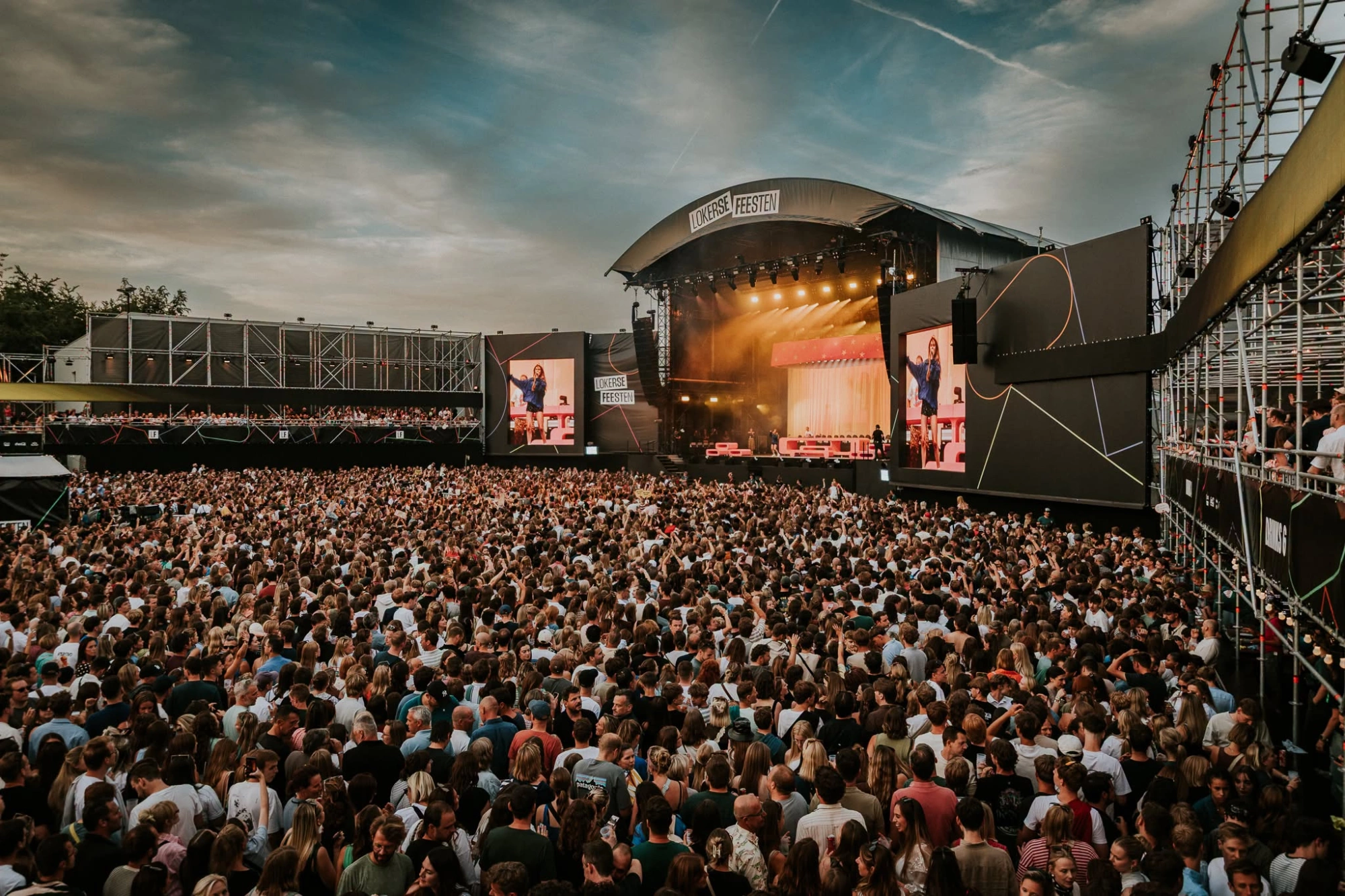
With us, closed loop writes every top-up and purchase to the card, so it keeps working when the network or power fails, as at Lokerse Feesten.
Each all-in-one terminal also has its own 4G SIM behind the wifi. How we plan the site network with you is in wifi on your event site.
Open loop, closed loop or hybrid: which fits your visitors?
Choose by who your visitors are and what you want to control.
Open loop lets everyone pay with their own card or phone. Closed loop puts a festival card or wristband in between. Hybrid combines both on one site.
Closed loop gives you control: crew credit, sponsor credit, deposits and offline sales. Open loop removes the top-up queue.
Many festivals end up hybrid: closed loop inside the gates, bank cards at the edge. Our terminals for cashless payments at festivals run open loop, closed loop and hybrid setups.
At an event you may require your own card or tokens, if you say so clearly in advance, show prices in euro and keep the conditions fair (FOD Economie guidelines, 2026).
What do you ask a supplier?
- Can we run open, closed and hybrid on the same site, on the same terminals?
- How do visitors who only carry cash get onto the system?
- Can we show prices in euro next to any token or coin unit?
Our explainer on open loop, closed loop or hybrid payments goes deeper, and how cashless works next to cash covers the cash question.
How do visitors top up and get their money back?
Visitors should top up in seconds and get their remaining balance back without effort. Refund complaints are what the press writes about after a festival.
Check both flows with a test card in the demo.
A refund isn't compulsory, but visitors must know before they buy a ticket whether there is one, and on what terms. Without a refund, say up front whether visitors can spend their whole balance on site.
The FOD Economie advises a simple refund at no cost, as best practice rather than a rule. If you charge a fee anyway, keep it at or below your own cost, for example at most one soft drink at the event.
Lokerse Feesten 2026, for example, took refund requests from 12 August to 11 September, at no cost (Lokerse Feesten cashless info).
Since summer 2025 a code of conduct for festival payments asks for more: clear costs up front, easy refunds and euro prices. We summarised it in the code of conduct for festival payments. All the rules on leftover credit are in leftover cashless balances.
What do you ask a supplier?
- Which top-up routes do you offer: bank app, card, Apple Pay or Google Pay, voucher, cash?
- Can visitors top up before the event, and link a pre-sales voucher themselves?
- How does a visitor ask for the rest back, and what does it cost them?
- Can visitors donate their remaining balance to a good cause?
- How are cup deposits refunded, and can one visitor return more cups than they bought?
Cup deposits are a refund flow of their own: reusable cups and deposits explains the options.
Who brings the hardware, and who stands next to your team?
Ask who owns the terminals, who configures them and who is on site when something fails at 23:00. The answer decides whether your bar volunteers serve drinks or troubleshoot devices.
Hardware is also one of the biggest cost drivers: the number of terminals, mobile versus fixed, cards or wristbands, and how many technicians stay on site. Ask for each one separately.
What do you ask a supplier?
- Are the terminals your own, and what happens when one fails during the peak?
- Contactless only or chip and PIN too, and how do they cope with rain?
- How long does a battery last, and how do you charge 50 terminals overnight?
- Which service levels do you offer, from remote support to a team on site?
- Do you brief our bar crew before doors open?
Our hardware range and service levels are on the site: do-it-yourself, start-up help, or full service with our team on site.
Does it connect to your ticketing, crew platform and payment partner?
Pick a system that talks to the tools you already use. Otherwise you rebuild crew vouchers and sales reports by hand.
Ask for a live example with your ticketing partner, not a logo on a slide.
What do you ask a supplier?
- Which ticketing partners are connected today, and can pre-sales credit land on the card?
- Can our crew or accreditation tool send daily credit to staff automatically?
- Which payment partners can we use, and do we keep our own contract?
- Is there an open API for our own reporting?
- Can sales go to the registered cash register system (GKS 2.0) or to accounting?
See which partners we connect in our integrations.
What do you see during the night, and when is the money yours?
You need live sales per bar and per device during the event. After it, you need a closing report your accountant can use.
Ask just as clearly when and how the money reaches your account.
What do you ask a supplier?
- Can we see sales, stock and top-ups per bar and per device in real time?
- Can we spot a terminal with odd refunds or voids during the night?
- What does the closing report hold: revenue, credit, deposits, refunds?
- When is the money paid out to us, and through which payment partner?
- What happens to balances nobody claims?
Our live monitoring app shows status, sales and refunds per location and device.
With Beyond Ordering, card payments and top-ups go from the payment partner straight to your own account. We never hold your money, and you decide what happens to unclaimed balances.
If we run your refunds, you get a statement and the rest of the refund pot back, minus any refund fees in your quote, within 14 working days after the refund period (our terms and conditions).
In practice: Lokerse Feesten
The event: Lokerse Feesten, ten days and 135,000 visitors.
The challenge: one platform that talks to ticketing and to the festival's own crew platform, and keeps working if the network or the power fails.
The setup:
- Offline: inside the site everything runs closed loop; every top-up, purchase and refund is written straight to the cashless card.
- Hybrid: open loop and hybrid terminals at the edge of the site, from the shuttle bus to the campsite (sold as a separate camping ticket), in one platform.
- Top-up: one QR code on each card with three routes: Bancontact Pay, the phone camera for cards and wallets, or a Tickoweb pre-sales voucher.
- Crew: the festival's own platform, LF Crew, sends credit to the cards of that day's staff through our open API.
- Deposits: a visitor can return at most 20 cups more than they bought, which stops deposit abuse.
- Refund: after the event visitors get their balance back to the IBAN they enter, or donate it to local good causes.
The result: more visitors topped up online, the bar went faster and the info desk got noticeably fewer questions. Read the full Lokerse Feesten story.
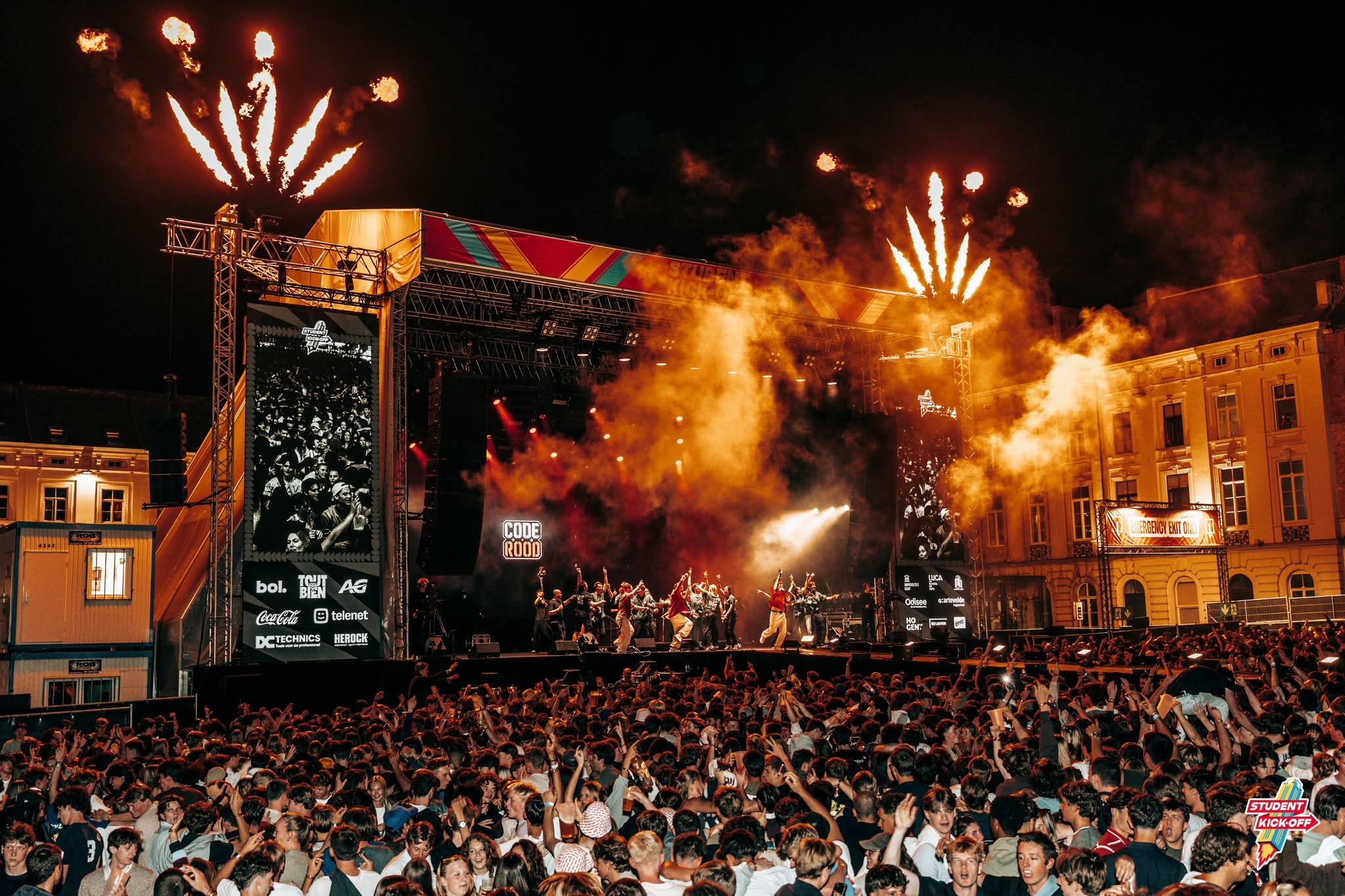
Also running on Beyond Ordering: Couleur Café, Student Kick-off Gent, Brugge Plus and Sinksen Kortrijk.
Checklist for your demo round
Run every supplier through the same five steps, so you compare answers and not presentations.
- Write down your visitor mix: how many pay by card, how many bring cash, how many come back every day.
- Send all suppliers the six criteria and the questions above before the demo.
- Ask each one to show a top-up, an offline purchase and a refund on a test card.
- Ask for a reference festival of your size and call it.
- Compare offers line by line: terminals, carriers, service level, payment partner, payout.
Then plan back from your event day: demo and proposal, kick-off with our team, onboarding with the payment partner, configuration and a dry run, then the team briefing.
Frequently asked questions
What is the best cashless payment system for a festival in Belgium?
There's no single best one. The best fit depends on your visitors, your site and your team.
Score each supplier on the six criteria above, and ask to see offline sales and a refund live.
Which cashless suppliers work in both Belgium and the Netherlands?
Several do. Ask each supplier for a reference festival in the country where you organise.
Is open loop or closed loop better for a festival?
Closed loop gives you more control and works offline; open loop removes the top-up queue. Many festivals run hybrid: closed loop inside, bank cards at the edge.
How a whole festival day runs is in how a cashless festival works.
What are the downsides of cashless payments at a festival?
Visitors may pay a fee to get credit back. A system that needs the network can stop at the peak. Visitors with only cash need a route in.
Each of these is a question in the lists above.
Put us through the same six questions
Bring this list to your demo with us too. We walk you through offline sales, a top-up and a QR Refund, and answer the payout question for your festival.
In a 30-minute demo we'll plan it around your site and your dates for summer 2027. Rather ask a question first? Get in touch.
Six criteria, tested on a test card
In 30 minutes we'll show you a top-up, an offline purchase and a QR Refund, and answer the payout question for your festival.
Read more stories from our blog
Ordering via QR code in your bar or restaurant: how it works
Guests scan, order and pay upfront on their phone, and the order goes to the bar or kitchen. How it works, with the GKS rule and a summer bar.

Hospitality VAT in Belgium: which rate for your café or restaurant?
Hospitality VAT in Belgium: 12% on served food, 21% on every drink you serve, 6% on food and soft drinks to take away. With a worked bill.
How to organise a fuif: the bar, the till and no more drink tickets
Organise a fuif in five steps: registration, Unisono, the bar, reusable cups and a till with one queue instead of paper drink tickets.